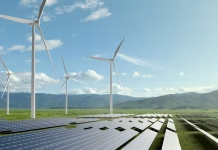
Solarium Green Energy has strengthened its position in India’s solar engineering, procurement, and construction (EPC) segment by securing a 50 MW turnkey solar project in Maharashtra, signaling continued momentum in utility-scale deployments.
The project, awarded by Maharashtra State Power Generation Company Ltd, reflects a growing preference among state utilities for integrated EPC solutions that combine execution with operational accountability. Under the contract, Solarium will deliver end-to-end project development, including design, procurement, construction, and three years of operations and maintenance (O&M).
Valued at approximately ₹188.5 crore (excluding GST), the contract highlights the increasing scale and financial depth of mid-sized solar EPC players competing in India’s evolving renewable energy landscape.
From a strategic standpoint, the award reinforces Solarium’s transition from a rooftop-focused player to a more diversified solar solutions provider with capabilities across utility-scale projects. This shift aligns with broader industry trends, where EPC firms are expanding vertically to capture higher value across the project lifecycle.
The development also comes at a time when companies are strengthening backward integration to improve execution timelines and cost control. With its recently commissioned 1 GW solar module manufacturing facility in Gujarat, Solarium is positioning itself to reduce supply chain dependencies and enhance project margins—an increasingly critical factor in competitive EPC bidding.
More broadly, the project underscores Maharashtra’s continued role as a key solar market, with state-backed entities driving capacity additions through EPC tenders. It also reflects the ongoing shift toward turnkey contracting models, where developers seek single-point responsibility to mitigate execution risks.
Overall, the contract illustrates how India’s solar EPC landscape is evolving—from fragmented project execution to integrated, scalable delivery models—supported by domestic manufacturing, policy push, and rising utility-scale demand.
Discover more from SolarQuarter
Subscribe to get the latest posts sent to your email.