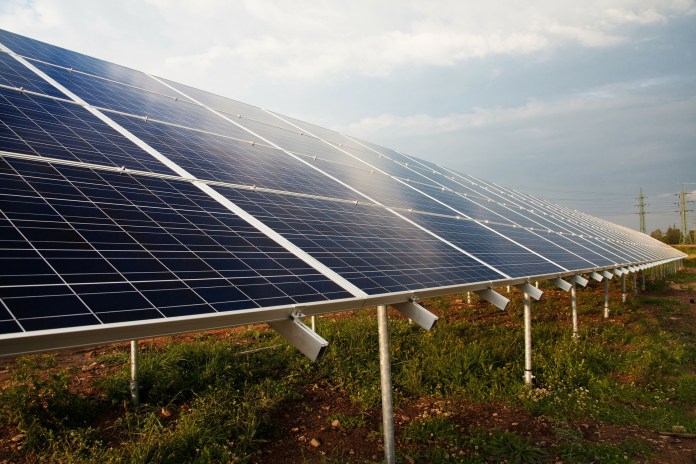
Out of the 11 PV power plants, the five located in Fertőd with a total installed capacity of 3.5 MW were commissioned in November 2019; the reamaining 6 power plants in the municipality of Tata with an installed capacity of 4 MW are still under construction and are expected to be commissioned in Q1 2020.
“Hungary has a great business development potential and a huge demand for photovoltaics. LONGi has been our strategic partner for some time now and we are also looking forward to a continued cooperation in other markets in the future,” comments Marek Farsky, Managing Director of Photon Energy Technology CEE s.r.o.
“Since Photon Energy is a leading solar solutions company and one of the largest solar power companies in Hungary, this initial cooperation with the company is a significant step for LONGi to further develop the Hungarian market, as well as the Eastern Europe region,” said Nick Wang, Regional Sales Director EMEA of LONGi Solar. “We are very grateful for the recognition and trust from our local customers and partners.”
Solaria’s 50 MW Santiz solar park in Salamanca, Spain. Photo: Solaria
The electricity will be supplied from three projects in Castilla y León and two in Castilla La Mancha. The five solar parks will have a total installed capacity of 252 MW, will produce around 500 GWh per year and will be connected to the grid progressively through 2020.
Darío López, COO of Solaria: “It is an honour to start working with Statkraft, a reference company in the European energy sector, and we are grateful for the confidence they have shown in Solaria. This agreement reaffirms our commitment to develop projects with very high quality PPAs that will allow us to access very attractive financing.”
Carsten Poppinga, Senior Vice President Trading & Origination at Statkraft: “We are proud to sign this PPA with one of the leading solar projects players in Spain and thus contribute to the further development of renewable assets. We will use this power to strengthen our position as a leading supplier of green power deliveries to major industrial customers on the Iberian Peninsula.”
The energy poured into the grid by the photovoltaic plants included in these contracts will be 100% renewable and will reduce CO2 emissions into the atmosphere by more than 101,000 tonnes a year, thus helping the European Directive 2009/28/EC on the reduction of pollutant gases. The volume of these contracts is equivalent to the consumption of more than 150,000 Spanish homes per year.
From industry-driven solar cells with efficiency values of more than 22 percent to effective new metallization processes for contacting solar cells — the Photovoltaic Technology Evaluation Center (PV-TEC) at the Fraunhofer Institute for Solar Energy Systems ISE in Freiburg has enjoyed numerous technological successes. The research factory, which was rebuilt and significantly expanded in 2018, is the largest R&D center for crystalline silicon solar cells in Europe.
In-line etching equipment for ozone-based wafer purification and single-sided emitter removal in the front-end division of Fraunhofer ISE’s Photovoltaic Technology Evaluation Center PV-TEC.
“We are thrilled to be able to present such outstanding results so soon after the inauguration of our PV-TEC,” said Dr. Ralf Preu, Division Director of PV Production Technology at Fraunhofer ISE. The laboratory operated as a research factory from its inception in 2006 until it was destroyed by fire in February of 2017. Rebuilding was completed in record time and the center reopened one year ago, providing one-of-a-kind infrastructure for industry-driven solar cell research, including research and development for processing equipment. “Thanks to the rapid rebuilding process and our innovative infrastructure and equipment, we have the opportunity to usher in the future of photovoltaics and cement our position as a leading international developer of PV technology,” added Preu.
More space for technological innovation
Fraunhofer ISE used the rebuilding process to restructure the laboratory, creating front-end and back-end divisions housed at two separate locations. The reorganization is intended to better meet the growing technical requirements for the various processes in terms of infrastructure and indoor climate, while at the same time creating space for new production lines and technologies. Today, around 180 employees develop manufacturing processes across 2400 square meters of technical facilities to make the high-efficiency solar cell concepts of tomorrow a reality. They collaborate with industrial partners from Germany and across Europe on cost-effective processes for the next generation of solar cell technology, with the aim of improving cell efficiency and energy yields, increasing throughputs in process technology and implementing current trends such as building- or product-integrated photovoltaics. Current research is focusing on cost-effective processes for monocrystalline PERC solar cells that achieve efficiency values of more than 22 percent and can be implemented on an industrial scale, as well as solar cells based on passivated contacts (TOPCon, heterojunction), including tandem solar cell designs. Concepts for digitalizing solar cell manufacturing (digital twins, self-learning machines, predictive maintenance) also undergo research and testing for the next generation of production equipment.
The back-end division of Fraunhofer ISE’s rebuilt Photovoltaic Technology Evaluation Center PV-TEC.
Key areas of research focus
The front-end technical center, located on Hans-Bunte-Strasse in northern Freiburg, is devoted to wafer characterization, wet-chemical etching, doping and processes for surface coatings. “Our work here focuses on upscaling high-efficiency solar cell technologies and integrating automation concepts that are essential for mass production so that we can present the photovoltaics industry with ready-to-use solutions,” explains Dr. Jochen Rentsch, Head of the Department of Production Technology – Surfaces and Interfaces at Fraunhofer ISE. New techniques for quickly and carefully handling silicon wafers between process steps are also of interest, given the wafers’ sensitive surfaces and ever-increasing thinness.
The back-end department, housed in the Solar Info Center on Emmy-Noether-Strasse, concentrates on printing and laser technologies and the characterization of solar cells. Along with fully automated production facilities, it is equipped with state-of-the-art laboratories for the development of printing and laser processes as well as the analysis of mono- and bifacial solar cells.
“A key focus of our research is developing superfine and precisely positioned contact structures in order to optimize material use in solar cell production and improve efficiency,” explains Dr. Jan Nekarda, Head of the Department of Production Technology – Structuring and Metallization.
To characterize the cells, a machine was built to perform automatic measurements of high-efficiency solar cells in various formats quickly and extremely precisely, even under bifacial illumination.
In addition to photovoltaic applications, PV-TEC develops technologies for other industries, for example coating technologies for fuel cell membranes or customized structuring processes for electronics.
Technological achievements at the new PV-TEC:
Busbar-free PERC cells with an efficiency value of 21.9 percent: The busbar-free solar cell was developed entirely in-house in an industry-driven process. It is made of monocrystalline silicon with an aluminum oxide passivation layer on the rear side and a homogeneous emitter on the front side.
Bifacial pSPEER shingle solar cells with a power density of 235 W/m2 (font-side irradiation 1000 W/m2, rear-side irradiation 100 W/m2). This advance in PERC technology makes use of patented passivated edge technology to improve energy yields by combining the low-loss separation of solar cells with shingle technology, which minimizes shading on both sides of the cell.
TOPCon (tunnel oxide passivated contact) cells with 22.5 percent efficiency: The cell was manufactured using Fraunhofer ISE’s own process. TOPCon, a charge carrier-selective contact developed at the institute, is based on an ultra-thin tunnel oxide in combination with a thin silicon layer and enables excellent charge carrier selectivity.
SolarPower Europe’s first EU Market Outlook for Solar Power shows that 2019 was one of the best solar years on record for the European Union, with 16.7 GW of installations added in the region, representing a 104% increase over the 8.2 GW added in 2018. This makes 2019 the strongest growth year for solar in the EU-28 since 2010.
Walburga Hemetsberger, CEO of SolarPower Europe, said: “Solar in the European Union is thriving. We have entered a new era of solar growth, with more new solar capacity installed than any other power generation technology in 2019. This boom in installations demonstrates that solar in Europe is on the right track, and with bold climate leadership from the new Commission, solar can help make the European Green Deal a reality.”
Aurélie Beauvais, Policy Director of SolarPower Europe, added: “There are several reasons to explain the growth of solar in Europe. Primarily, this increased demand can be attributed to solar’s cost-competitiveness – it is often the cheapest power generation source – as well as the approaching deadline for member states to meet their binding national 2020 renewable energy targets. EU countries have also begun to prepare for their road to compliance with the Commission’s Clean Energy Package, which sets a 32% renewables target by 2030, where many national governments are increasingly looking to low-cost solar to meet their targets.”
In 2019, Spain was Europe’s largest solar market, adding 4.7 GW; Spain has not held this achievement since 2008. Rounding out the top solar markets for 2019 were Germany (4 GW), the Netherlands (2.5 GW), France (1.1 GW), and Poland, which nearly quadrupled its installed capacities to 784 MW. This trend of increased solar installations was noted across the entire EU, with 26 of the 28 member states installing more solar in 2019 than the year before. By the end of 2019, the EU will enjoy a total of 131.9 GW, which represents a 14% increase over the 115.2 GW operating the year before.
Michael Schmela, Executive Advisor and Head of Market Intelligence at SolarPower Europe, said: “With solar being the most popular energy source among EU citizens, as well as the most versatile, and with price reductions continuing, we are only at the beginning of a long upward trend for solar in Europe. In terms of medium-term projections, we expect continued growth for the EU-bloc with a 26% increase in 2020 bringing demand to 21 GW, and installations on track to reach 21.9 GW in 2021. The record-breaking year is expected to be 2022, with an anticipated all-time high of 24.3 GW of installations, and again in 2023 with 26.8 GW of newly-installed solar capacity. The coming years are looking truly phenomenal for solar deployment in Europe.”
The 2019 solar installation data for EU-28 are first estimates from SolarPower Europe for solar power grid-connected systems and are based on official data from government agencies whenever possible. If such information was not available from primary sources, SolarPower Europe has gathered data mostly through its members, comprising national solar associations. As complete data for 2019 will only be made available by national entities responsible for solar statistics in the coming months, the actual installation numbers might differ from this first estimate. The forecast data for 2020-2023 is based on analysis from the Global Market Outlook 2019-2023 published in May. The final 2019 numbers and a new 5-year solar demand forecast will be published in SolarPower Europe’s ‘Global Market Outlook For Solar Power 2020 – 2024’, which will be launched at the Intersolar Europe trade fair in Munich in June 2020.
The European Green Deal is the flagship policy initiative of the new European Commission, and yesterday, after only 11 days in office, President Ursula von der Leyen presented the first proposals and targets of the ambitious climate strategy. With the aim of fostering European climate leadership, supporting the competitiveness of EU businesses, and becoming the first climate-neutral continent by 2050, Von der Leyen unveiled the Commission’s plans to transform the EU economy in service of the people and planet. The Green Deal communication reaffirms the crucial role of renewable energies to power a climate neutral future, and includes a European ‘climate law’, the revision of Europe’s GHG target to at least 50% and up to 55% by 2030, and up to €100bn in financing for the just transition.
Walburga Hemetsberger, CEO of SolarPower Europe, said: “The European Green Deal is a global milestone in the fight against our current climate crisis, presenting the kind of bold vision and policies necessary to combat this threat. With the announced action plan, the EU signals that it seeks to maintain its role as a global climate leader, with the ambition of strengthening Europe’s industrial strategy for clean energy technologies, creating jobs and ensuring that nobody gets left behind. As the lowest-cost and most easily deployed clean energy technology, solar is primed to help deliver the European Green Deal. With EU solar installations increasing by over 100% in 2019, and projections pointing to a rapid growth pattern in the coming years – as shown in our EU Market Outlook 2019-2023 – solar is on track to power a clean and renewable Europe.”
Aurélie Beauvais, Policy Director of SolarPower Europe, added: “A cornerstone of the Green Deal is the proposal of ‘An Industrial Strategy for Europe’, which is expected to be announced in March 2020, with clean energy technologies and sustainability at its core. This is in line with the joint letter signed by SolarPower Europe, along with 13 national associations and 10 major European technology institutes, calling for a robust industrial strategy for solar and other renewables to be recognised as a strategic value chain for Europe. This is a golden opportunity for European industry to continue to develop innovative and future-proof technologies, and to re-establish a strong manufacturing value chain to provide long-term energy security.”
Other Green Deal proposals of key importance to solar include the ‘Renovation Wave Initiative’, set to be announced in 2021, which could boost the installation of solar rooftops in Europe, exploiting the 90% of EU roofs that are currently unused. Miguel Herrero Cangas, Policy Advisor at SolarPower Europe, commented: “The Green Deal’s Renovation Initiative promises to address a crucial element of the energy transition: our buildings. As the EU building stock accounts for 36% of the region’s CO2 emissions and approximately half of the total EU energy demand, climate-oriented renovations are necessary to achieve net-zero emissions by 2050. SolarPower Europe recently issued a joint letter, along with 11 European associations from the construction and energy sector, which called for integrated renovations of Europe’s existing building stock, with on-site renewables at their heart, alongside smart solutions and energy efficiency.”
The communication on the Green Deal also included the ‘Green Financing Strategy’, to be released in March 2020, which involves the mobilisation of substantial public and private investment in clean energy technologies and assets. Mercè Labordena, Senior Policy Advisor at SolarPower Europe, said: “Green financing is a critical pillar for achieving Europe’s climate targets, particularly in order to ensure a just transition for all Europeans, and to facilitate the transition in hard-to-abate sectors and in former coal regions. In fact, solar is the most job-intensive renewable technology, with the potential to create hundreds of thousands of highly-skilled and local jobs in Europe.” Labordena added: “The European Green Deal and upcoming legislation on Sustainable Finance will play a critical role in leveraging the funds needed for the transition and guaranteeing that future investments are directed towards solar, and other technologies and assets that will support Europe’s industrial leadership in clean energy.”
The roadmap for climate action presented today included a tentative timetable, with proposals for a climate law, just transition fund, and a plan to increase 2030 climate targets to be announced in 2020, and a proposal for a carbon border adjustment mechanism and revision of the Energy Taxation Directive to be announced in 2021. The full extent of the European Green Deal will be revealed before COP26 in Glasgow next year.
Vikram Solar, one of India’s leading solar module manufacturers and prominent rooftop solar & EPC solutions provider commissioned three new solar plants for Airport Authority of India (AAI) in Dibrugarh, Gaya, and Gondia, furthering the company’s contribution to solarization of airports in India.
These three new projects have a cumulative capacity of 1165 kW (or 1.1 MW), leading Vikram Solar to have a portfolio and experience of commissioning 6 solar projects for airports (Kolkata, Calicut, Dibrugarh, Gaya, Gondia and Cochin) in India till date, with cumulative capacity amounting to more than 4 MW.
The capacity of the solar plant at Dibrugarh, Assam airport is 725 kW and the project is designed to serve as a Solar Carport. The plant is expected to provide accommodation to 200- 220 vehicles. Vikram Solar’s 345Wp Mono Crystalline modules were used to cover the 8000 sq mtr area of the carport. The plant is expected to generate approximately 10,40,000 kWh of green energy annually.
The Gondia, Maharashtra airport project is 220 kW in capacity and used Vikram Solar’s 330 Wp Polycrystalline Eldora Grand Series modules. This ground-mounted solar plant will power the Birsi Airport office building.
The capacity of the solar plant at Gaya, Bihar airport is also 220 kW. The solar plant used Eldora Grand Series 325 Wp modules and expected to power 4 Airport Buildings at Gaya Airport.
Each of the two 220 kW solar plants in Gaya and Gondia is expected to generate nearly 3,00,000 kWh green energy annually.
Mr Dheeraj Anand, Head- Distributed Solar, Vikram Solar, shared on the occasion, “We are proud to be a partner of choice in contributing towards AAI’s vision of adopting renewable energy. Vikram Solar is certain that the successful commissioning of these 3 new projects is a testimony of our performance, capabilities and dedication towards customer satisfaction.”
He further added “We would also like to take this opportunity to thank AAI for entrusting Vikram Solar with these 3 new projects and thank them for leading the way with their ever-progressive move towards reducing carbon footprint by adopting solar power.”
Vikram Solar is spearheading India’s solar revolution with 1040 MW* EPC capacity portfolio. The company has commissioned a total of 6 airport projects till date- 5 for AAI and 1 project for Cochin International Airport Limited (CIAL).
The Global Infrastructure Facility’s (GIF) Governing Council approved $1.5 million in funding to support the World Bank’s work with the Government of Vietnam on the Solar Pilot Auction Program. The GIF, working with the World Bank’s Energy Global Practice, will help the government to design and structure the Auction Program to transition from a feed-in tariff regime, to a sustainable competitive auction scheme for solar generation. The program will help to address Vietnam’s increased demand for energy and promote inclusive growth by strengthening the enabling environment for the private sector.
“We are working closely with the government to bring more private resources to the energy sector where the needs are huge and urgent,” said Ousmane Dione, World Bank Country Director for Vietnam. “GIF’s support comes at a critical time to help the country overcome multiple remaining obstacles to further develop solar power, including financing and risk allocation.”
The Solar Competitive Bidding Program by the Ministry of Industry and Trade is part of the government’s broader efforts to accelerate investments in energy efficiency and renewable energy to increase the country’s diversification of electricity generation and reduce CO2 emissions. The country aims to bring 12 GW of solar energy onto the grid by 2030.
“This would be the first solar auction program to be implemented in Vietnam, which would have large scale replicability. We are pleased to support the Government of Vietnam as they mobilize private financing through standardized, transparent, and programmatic approaches,”said Jason Lu, Head of the GIF.
While Vietnam’s economic outlook remains robust, with a forecast of 6.5 percent growth in 2020 and 2021, it faces many challenges in meeting its infrastructure needs, particularly in the energy sector that faces growing demand. Vietnam is actively seeking to attract private investment and use more public-private partnerships in the energy sector, but needs to adapt its current framework to enable competitive selection of independent power producers and minimize the cost of solar generation. With the support of the World Bank and the GIF, the government is developing competitive bidding schemes to deploy utility-scale solar PV.
“We are pleased that these long-term contracts are enabling us to expand O&M services within our core markets”, explains Matthew Lusk, BELECTRIC’s Director of Business Development and Operations in the US. “Including these plants, we are operating and maintaining a solar portfolio with an installed capacity of approx. 160 MWp in the US.”
Globally BELECTRIC’s O&M teams are managing around 1.7 Gigawatt. This outstanding reputation in delivering quality service played a key role in their successful bid for this O&M contracts, which include semi-annual preventive and corrective maintenance.
BELECTRIC is one of the largest Operations & Maintenance providers worldwide BELECTRIC’s core business is the design and construction of solar powered energy facilities and large-scale battery storage systems for the international power utility market and independent power plant operators. In operating these facilities, the company targets lowest cost of energy at best possible ecological balance. As a natural extension of this business, BELECTRIC focusses on reducing operating costs to its full range of Solar Maintenance, Repair and Operation services.
Waaree has recently installed 1500 Solar pumps across Jharkhand to help solve villages the drinking water problems. These pumps are installed under the Solar water pump scheme , for jharkhand state, to help solve the acute drinking water shortage problems.
Waaree Supplied 1HP Solar water pump, with head of 60 meters. these submersible pumps are installed at village level by panchayats at village level. The Submersible DC Solar pumps draw energy from solar panels and come be interchangeable drivers, which helps them to convert to AC Pumps if need arises.The solar pumps are of high quality and come with 3 years warranty, backed by waarees largest sales and service network across the state.
With a vision to provide high quality and cost effective sustainable energy solutions across all the markets, reducing carbon foot print paving way for sustainable energy thereby improving quality of present and future human lifeWaaree is looking forward for more such orders to help people avail clean drinking water.
In the twelve-month period ending Sep-2019, India added a record 1,853 MW rooftop solar capacity, which is 17% higher than the same period last year according to the latest report released by BRIDGE TO INDIA. PV inverter suppliers from China are the top players in the solar rooftop sector. Growatt, one of the TOP 3 rooftop solar inverter brands in China, has become the NO.1 solar rooftop inverter supplier in India according to the report.
Growatt entered the Indian solar market around eight years ago. It provides a wide range of solar inverters with capacity from 1KW to 80KW for the rooftop sector, and is planning to launch an advanced 200KW inverter model next year for ground-mounted and utility-scale solar farms. The company’s growth momentum has been very strong over the past years.
Rucas Wang, Growatt regional director attributed the achievement to the company’s strong foundation built upon its product reliability and professional service. “Growatt is a global leading inverter brand in the solar rooftop sector. Our advanced PV technologies and product reliability are very well recognized by clients and end-users around the world,” said Wang.
The company pursues a strategy of localization and has established service center and warehouse in Hyderabad. Additionally, it has hired local Indian sales representatives and now has more than 20 Indian service engineers in 8 major cities to provide on-site services across India. “Growatt provides advanced and reliable products and has been increasing investments in India. We have a lot of training workshops and a lot of advertisements. And we have a big Indian team, that provides superb services for our clients and end-users. That’s why we stay ahead of the solar rooftop competitors in India,” said Wang.
What are focus market in APAC? How do u see growth of the inverter market in coming year?
Prior to discussing Sineng’s focus market, it is worth first mentioning the state of the play of current and forthcoming market. The Asia Pacific region saw significant growth in its contribution to renewable energy (RNEs), thanks in no small part of China, India and Vietnam’s meteoric rise. Asia Pacific (APAC), led by China, is predicted by IHS and other data powerhouses to remain the largest regional market of PV installation in the future. Though it is being predicted that the position of India will be replaced by USA, but it will still punch well above its weight in the world market share. The biggest growth market in Asia will be Vietnam, expiration of FiT in Vietnam has caused a boom that will led to a projected market. While the top three countries are no surprise, there are some interesting players rounding out in 2019. The “Rest of APAC” region -Philippines, Thailand, Malaysia, South Korea, Australia, Taiwan, Japan and others is being driven by strong growth in utility-scale (>5 MW) installations. Japan continues its upward slide in the global rankings, despite having limited availability of land for ground mount plants. Sineng’s has intensified its focus on global markets and international expansion with exports expected to grow exponentially. The company focus on already owned large market share APAC regions like-China, India and Vietnam will remain same, on the other hand, it will extent it focus on other regions.
What are the technological innovations that we will witness in the coming years?
As the PV system brain, inverters have a significant impact on LCOE, the industry is now competing against itself in order to provide more advanced and efficient solutions. As the functionality of inverters is expanded, Sineng inverters are simultaneously shifting towards digitization. In coming years, we could witness innovation in three sectors in utility scale solar application-1500 V plus system, smart energy storage solutions (ESS) and intelligent cloud and data mining. Higher system voltage will allow for fewer combiner boxes, less wiring and trenching, and therefore less labour, reducing capex and opex for lower levelized cost of energy (LCOE) and improved return on investment. Energy storage solution + PV is appearing like a must and demand for smart PV plant for abandonment of light and grid support, consequently, sophisticated ESS with much more functionalities could be witnessed. Instigation and Innovation in data mining and cloud computing in PV sector will be intensified to make O & M and control and monitoring affordable and easy.
What are the major projects Sineng has worked on in the APAC region?
GWs and MWs projects have been installed and commissioned by Sineng over these 5 years in APAC regions. There are many on-going projects which will be installed and commissioned in the coming years. Our partners are Shapoorji Pallonji, L&T Construction Limited, Sprng Energy, Azure Power, Tata Power, B.Grimm Power, Super Energy, Bamboo Capital and some other renowned EPCs and independent developers.
How do you see inverters evolving in the coming years in the APAC region? How is Sineng coping up with this ever evolving market and technology?
Being a product-focused company, Sineng’s always looks at its offerings and strives to improve. As sineng strategy of the business revolves around differentiation tied to product superiority, so there is a zeal in us to make products and service betters. In spite of relentless cost pressures and the inevitable rolling back of subsidy support mechanisms in most markets, the inverter market has been witnessing an eventful period. Strong competition of Chinese suppliers in internationalizing has increased price competition. As world always follow money and security, we believe we can cope up with the evolving market by holding on our mission “High quality is low cost”.
The Clean Capital Energy Group kicked off construction of the “La Huella” ground-mounted project in Chile at the end of November in a ground-breaking ceremony. Participants of the official ceremony included numerous senators, members of parliament and mayors from the region, alongside project managers of the CCE Group and of Spanish construction group OHL (Obrascón Huarte Lain), who are tasked with the project’s construction. The ceremony kick starts the approx. one-year implementation phase for the 87-megawatt plant, which is expected to generate around 220 gigawatt hours of electricity annually from the fourth quarter of 2020. The photovoltaic system, equipped with glass-glass modules and single-axis tracking, will be installed over a total surface area of 145 hectares in the country’s Coquimbo region, some 400 kilometres north of Santiago. Alongside “La Huella”, the CCE Group has secured three further PV projects in Chile with a combined output of some 230 MWp, which it plans to bring online by 2022. The CCE Group has been operating in Chile since as early as 2015, funding the development of a 500-MW portfolio that has already given rise to two 100-megawatt plants.
Chile – the world’s highest PV yield
“We are extremely proud of this project and are now looking forward to starting construction on site, the La Huella plant being as it is such an important milestone in our Chile operations,” explains CCE Group Managing Director Martin Dürnberger. Unlike most projects in Chile, the “La Huella” project is being financed without the banks and, for now, without an electricity supply contract in place. To implement the approx. 300-MW project portfolio, a joint venture was established with a German pension fund. “In a commercial sense, this is clearly the better solution,” explains Mr Dürnberger, adding: “This CCE project is yet another important step forward in expanding solar energy yield in Chile, a region enjoying the greatest solar irradiation on earth and consequently the highest PV yield.”
JinkoSolar launched its new flagship module Tiger at All-Energy Australia 2019. In this article, we can answer questions like What is to be expected from JinkoSolar 460 Wp modules, Tiger module & its higher energy density and What Tiger means for customers
The module includes upgraded PERC half cut cell based on 9 busbars with TR technology, with module efficiency reaching 20.8% and the module peaking up to 460Wp. Tiger provides a significant enhancement of its 9BB and TR technology and offers customers a highly competitive performance-to-cost advantage as well as a fast time-to-market with direct migration from Cheetah version.
By leveraging the new capabilities gained from Cheetah’s success, JinkoSolar’s Tiger delivers 10% higher power over Cheetah version and 5% over Cheetah Plus. At the same time, its design is fully compatible with its existing module encapsulation processes and equipment, allowing its comprehensive supply ecosystem to be reused. As a result, it offers a seamless migration path with a fast go-to-market cycle time with a very limited engineering resources for customers to achieve the product benefits from the new technology offering. Therefore, JinkoSolar claims to reach 9-10GW of Tiger modules of 460Wp by adopting TR technologies and is confident to push power to the 500 Wp or above by 2021 according to the Company’s roadmap.
JinkoSolar is well prepared to begin 460Wp Tiger panels volume production early next year and make record of its fastest ramping model. The Tiger panel provides better density and power value than previous models, due to using a combination of 9BB and tilt ribbon technology.
Multiple busbars provide lower resistance and a shorter path for the electrons to travel resulting in higher performance, but too many busbars will shade part of the cell and so they need to be carefully designed. Another benefit of having 9 BB is if micro-cracking does occur in a cell due to external stresses there is less chance of this forming a hotspot as the electrons have many alternative busbars to flow along. Hence, Tiger modules which uses 9 BB, that stands for lowering electrical resistance and further increasing efficiency.
TR (Tilling Ribbon) is an emerging cell interconnect technology using round ribbon instead of conventional flat ribbon to achieve a tiled interconnection of the cell, eliminating the typical cell gap architecture and making cells theoretically adjacent tightly.
Different from shingled configuration which cells are made by laser cutting a normal full-size cell in to 5 or 6 strips and layering them in a shingle structure using rear side connection adhesive, TR technology just removes the gap between cells and seamless interconnecting them with round ribbon. This process maximizes the panel surface area to the extreme as it doesn’t sacrifice overlapped area of partially shaded cell. Thus increasing the panel efficiency. In addition to this, uniquely done design at the part where round ribbon connecting cells makes them 100% contact without any lose.
Scatec Solar has been awarded three solar power plant projects in Tunisia totaling approximately 360 MW, following an international tender launched by the Tunisian Ministry of Industry and SMEs earlier this year.
“We are excited to secure our first projects in Tunisia, supporting the Government’s target to reach 30% electricity production from renewables by 2030. We have solid experience from successful development, execution and operation of projects in Africa and the Middle East over the last years that we bring with us as we enter this new market”, says Raymond Carlsen, CEO of Scatec Solar.
The three projects of approximately 60 MW, 60 MW and 240 MW will be located in Tozeur, Sidi Bouzid and Tataouine respectively. The solar power plants will hold 20 years of PPAs with Société Tunisienne de l’Electricité et du Gaz (STEG). The solar plants are expected to generate about 830 GWh per year, enough electricity to power more than 300,000 Tunisian households annually and contributing to avoid 480,000 tonnes of CO2 emissions each year.
Scatec Solar will be the lead equity investor in the projects. The company will also be the Engineering, Procurement and Construction (EPC) provider and provide Operation & Maintenance as well as Asset Management services to the power plants.
Since the end of 2016, the Tunisian government has embarked on the implementation of its programme for development of electricity production from renewables. In this framework the Ministry of Industry and SMEs launched an international tender for solar PV projects in 2019.
The new projects will provide energyenough to power 230,000 homes – and an additional 590MW of energy storage capacity.
The three projects will be located in southern Nevada and are expected to be completed and serving customers by 1 January 2024. With the addition of these new projects, NV Energy will also meet the commitment made to customers last year to double its renewable energy.
The three new projects are:
Arrow Canyon Solar Project – 200MW solar photovoltaic project with a 75MW – 5-hour battery storage system. The project will be located in Clark County, NV, 20 miles northeast of Las Vegas on the Moapa Band of Paiutes Indian Reservation. It is being developed by EDF Renewables North America, a market-leading independent power producer and service provider with over 30 years of expertise in renewable energy. EDF Renewables’ North American portfolio consists of 16 gigawatts of developed projects and 10 gigawatts under service contracts.
Southern Bighorn Solar & Storage Center – 300MW solar array that includes a 135MW-4 hour Li-on battery energy storage system. The project will be built in Clark County, NV on the Moapa River Indian Reservation about 30 miles north of Las Vegas. It is being developed by 8minute Solar Energy, the largest independent developer of solar PV and storage projects in the United States, with over 15GW of solar and storage under development in California, the Southwest, Texas, and the Southeast, with more than 2GW of solar power plants now in operation.
Gemini Solar + Battery Storage Project – 690MW solar photovoltaic array coupled with a 380MW AC battery storage system. The project will be located in Clark County, NV 25 miles northeast of Las Vegas on approximately 7,100 acres of federally-owned land under the management of the Bureau of Land Management. It is being developed by Quinbrook Infrastructure Partners in collaboration with Arevia Power, who are managing the development phases of the project. Quinbrook is a specialist investment manager focused exclusively on lower carbon and renewable energy infrastructure investment and operational asset management.
The projects will create more than 3,000 construction period jobs using union labour. This will ensure the highest quality construction is used in delivering these projects so they can serve Nevada’s energy needs for the long term.
NV Energy signed its first renewable power purchase agreement in the 1980s and has since prided itself on making renewable energy development a priority. The company exceeded Nevada’s current renewable energy requirement for the ninth straight year in 2018.
In April, Senate Bill 358 was signed into law by Nevada Governor Steve Sisolak requiring Nevada energy providers to achieve a 50% renewable energy portfolio standard (RPS) by 2030 – a change that NV Energy fully supported and is one step closer to satisfying with these projects.
“Today’s decision brings the environmental and price benefits of low-cost solar energy to our customers – and the addition of energy storage capabilities allows us to extend the benefits of renewable energy to times when the sun is not shining,” said Doug Cannon, NV Energy President and Chief Executive Officer. “We are proud to be delivering a renewable energy vision to our customers that also supports Nevada’s economic and sustainability goals.”
To achieve grid parity, JinkoSolar pursued the development of advanced PV technologies, thereby reducing the cost of renewable energy. Cheetah fulfils this purpose. Credits to its ultra-high module efficiency.
Cheetah enters a new paradigm, with a new wafer size, new cell design and updated module concept that will keep pushing power results higher, even above 415 Wp. Now you can have one of the most powerful (and one of the most economically feasible) solar panels that are commercially available for purchase today. With power up to 415 Wp, Cheetah will maximize your PV system capacity, generating more energy over 25 years and maximizing the customer’s economic returns. Cheetah’s ultra-high output occupies less area for a given power output goal. With more watts on the roof, power density is improved and the installation costs per watt are significantly reduced. Cheetah’s high module power delivers improved power density, leading to less land usage, and reductions in both BOS and labour costs.
The half cell design ensures an improved shading response, resulting in higher yields when the module is partially shaded. Shading loss experienced by half-cell modules is much better than conventional modules in certain shading conditions. It also offers positive power tolerance of 3%, against industry practice of 5 Wp.
Cheetah has an improved temperature coefficient of Pmax -0.35%/°C. Real world energy output can be increased up to 1% per day, perfect for delivering more electricity on hot summer days. It ensures reliability by achieving certification at twice of the industry Anti-PID standard, and the intensity specified in the IEC standard.
Goldi Solar –72GN Series Polycrystalline Module&72GN1 Series Monocrystalline Module
72GN Series Polycrystalline Module:
Goldi Solar’s 72GN Series Polycrystalline module is one of the best PID Free module under the various climatic conditions ranging from -40℃ to + 85℃. It can be used for all applications, especially ideal for installations in regions of high temperature and high humidity. It sets a new standard of reliability and performance for photovoltaic systems. With power classes of up to 335Wp, 72GN Series Polycrystalline is the most powerful 72-cell module of its type available in the market. Being one of the best PID Free module in the market it ensures highest reliability under all extreme conditions.
• Excellent module conversion efficiency of up to 17.31%
• Up to +2% positive power output guaranteed
• Loss minimization due to excellent temperature co-efficient
• BOS cost reduction for 1500 VDC System by connecting more modules in a string
• Reducing equipment loss & increases the power generation in overall system
• Better performance even at low irradiance condition
• Higher specific yield
72GN1 Series Monocrystalline Module:
Goldi Solar’s 72GN1 Series Monocrystalline Module is known for durability, performance, efficiency, and high-power output. Goldi Solar manufactures some of the most efficient and highest quality solar modules in the world. This 72GN1 Series module uses a more advanced double-sided solar cell, which also produces energy from reflected light off the rear of the module and it generates power class up to 380Wp. The reinforced frame and the module’s ability can withstand snow load up to 5400 Pa and wind load up to 2400 Pa. Goldi Solar promises the warranty, for a product up to 10 years and performance up to 25 years. The power warranty promises 90% of generation for 10 years and 80% for 25 years. 72GN1 Series module offering 375Wp is one of the most in-demand modules for the rooftop installations providing best in-class quality and performance.
• Excellent module conversion efficiency of up to 19.63%
• Up to +2% positive power output guaranteed
• Loss minimization due to excellent temperature co-efficient
• BOS cost reduction for 1500 VDC System by connecting more modules in a string
• Reducing equipment loss & increases the power generation in overall system
• Better performance even at low irradiance condition
• Higher specific yield
Waaree – Super 400 Series
Rooftops have many specific challenges like limited space, local shading to name a few, so conventional module is not an optimum option. Hence, a novel design upgradation along with large wafer size and half cut solar cells was developed. Introducing 400 Wp modules – The first product with such power output in Indian PV market (Figure 1). The modules utilize larger wafer size and highly efficient full square Mono PERC solar cells. The modules are available in 2 variants mono facial (Super 400) and Bifacial variant (Super 400 Pro).
Figure1: Super 400 Series by Waaree Energies. Super 400 (Top) and Super 400 Pro (Bottom)
Significant reduction in resistive losses
The super 400 series modules use half cut cells which directly halves the current output from the cell. Halving the current reduces the resistive losses (I2R) of the module by one fourth. Primarily this reduction in resistive losses directly reduces the nominal module operating temperature (NMOT). Additionally, such gain is improved significantly with increase in irradiance as the current output of the module is directly proportional to the irradiance.
Advantages of enhanced design
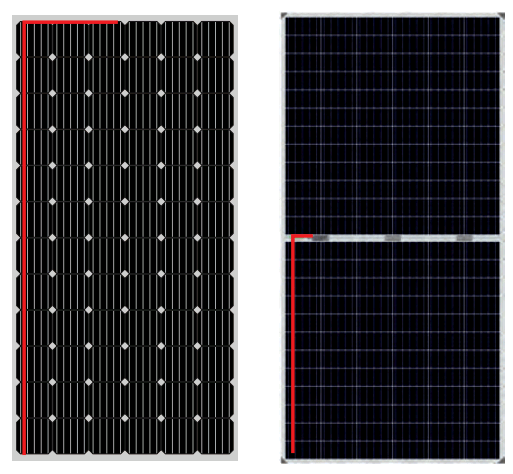
Compared to the traditional modules, the excited electrons in the super 400 module have to travel almost half the distance before they are connected at the module’s junction box (JB). Comparing to traditional module, the electron faces less resistance which further increases the power output of the module (refer to Figure2).
Figure 2: The path travelled by exited electron in traditional module (on left) and super 400 module (on right)
Better performance in shade
For a rooftop site, there may be times when a module experiences shadow. Such shadow may be due to many reasons such as expansion of nearby building, shadow due to nearby trees, bird shit, cloudy atmospheric conditions etc. which may be temporary, for few hours or days or even permanent. Shadow even if on any cell(s) in the string hampers the generation of the string and hence the solar module. Under normal operation, both the traditional and doublet module produces the desired power output. But when all the strings of the traditional module are under shadow all 3 bypass diodes of the module are activated resulting in zero power output from the module. Whereas in case of super 400 module, the bypass diode is in between the two strings of upper and lower half of module. While the lower half is under shadow, the upper half of the module is continuously generating power. Hence, 50% of power under shadow conditions is retained.
Figure 3: Effect of shadow on traditional and super 400 module
Saatvik – SGE 60M and SGE 72M Mono PERC Series
Saatvik Green Energy is a new age solar technology company, involved in the manufacturing of high quality solar modules, with an in-house manufacturing capacity of 500MW. The current product portfolio includes solar modules ranging from 40Wp up to 380Wp. Saatvik uses both poly-crystalline and mono-crystalline cells to assemble these solar modules, coupled with multiple rounds of testing, during and after, the manufacturing process, ensuring the highest quality product for its esteemed customers. All module ranges have been certified to highest global quality standards such as IEC 61215/IS 14286, IEC/IS 61730, IEC 62804, IEC 61701, IEC 62716, IEC 60068, UL 1703 and IEC 62759.
Saatvik has successfully delivered more than 150 MW solar modules in its first 2 years of operation, which have been successfully installed at various ground mounted projects, government buildings, government utilities, railway stations, hotels and universities.
Saatvik’s SGE 60M and SGE 72M Mono PERC Series, has successfully completed testing for the entire range of IEC & BIS certifications, which gives Saatvik further competitive edge in the solar industry. Saatvik supports continuous adoption of new and advanced technology by the solution providers, and endeavors to provide them with the same for overall growth of the industry. Usage of Monocrystalline panels gives an additional advantage to the solution providers as they can install more capacity in limited space. SGE Mono PERC Series is assembled on the same platform as the highest selling SGE Poly series, offering maximum reliability to its clients. It delivers a module level efficiency of as high as 19.45%, has high resistance to PID, can withstand 2400 Pascal wind load and 5400 Pascal snow load. The current range offering is from SGE 72M – 365Wp to 380Wp.
Technology Advancements
High module conversion efficiency.
Outstanding power performance even at low irradiance.
High PID resistant.
Easy to mount and ground.
IP67 junction box with extended cable lengths for easier installation.
Also, available with black/transparent back sheet and black frame.
We are targeting solar developers and EPC companies to help them achieve highest yields on their installations. They will get additional advantage over the already existing range of SGE Solar PV modules. This product is most suited for rooftop projects, in high electricity consuming industries, commercial spaces, with paucity of roofs, so that they can maximize their solar generation.
Spark Solar – BIPV Panels
Spark Solar Building-integrated photovoltaics (BIPV) panels are used to replace conventional building materials in parts of the buildingsuch as the roof, skylights, or facades. They are increasingly being incorporated into the construction of new buildings as a principal or ancillary source of electrical power, although existing buildings may be retrofitted with similar technology. The advantage of integrated photovoltaics over more common non-integrated systems is that the initial cost can be offset by reducing the amount spent on building materials and labor that would normally be used to construct the part of the building that the BIPV modules replace.
Spark solar BIPV panel is integrated into the building fabric rather than a ‘tack-on’ addition replacing conventional building cladding materials but with the added benefit of producing renewable electricity.
Spark Solar’s unique transparent PV solutions add a new dimension to BIPV by allowing and facilitating full PV building integration from facades to windows. With these technologies we anticipate that the future of PV is BIPV. The key advantage of BIPV is that the marginal additional cost in installation is more than offset by the production of renewable energy, this is why BIPV is one of the fastest growing segments of the photovoltaic industry.
In a environment that is pushing for zero carbon buildings, aesthetically pleasing BIPV solutions are becoming increasingly required by the urban environment.
In multi-storey buildings where roof space in often limited, facades and glazing offer additional surfaces with huge potential of generating electricity.
Spark Solar’s BIPV panels are ideal for incorporating into building envelopes due to their frameless design, aesthetic finish, and variable transparency. For these reasons Spark Solar’s BIPV is proving to be one of the only strategies available for renewable energy generation in the built environment.
In an important step forward for India’s renewable energy growth story, Fourth Partner Energy, one of the country’s largest distributed solar companies, announced today that Bank of America was extending to the firm, a local currency revolving credit facility. This $50mn line of credit is the Bank of America’s first locally denominated loan for commercial solar financing in India. Fourth Partner Energy will deploy these funds to further grow its operational solar portfolio by close to 150 MW over the next 18 months. By providing this revolving credit facility, Bank of America is helping to accelerate the transition to a cleaner and more sustainable power generation base in India.
This transaction expands upon Bank of America’s Environmental Business Initiative, which deploys capital to low-carbon, sustainable business activities. Since 2007, Bank of America has directed more than $145 billion to these efforts through lending, investing, capital raising and developing financial solutions for clients around the world.
“The need to mobilise and deploy capital to drive a clean energy future is critical to accelerating the global transition to low-carbon, sustainable energy sources and advancing many of the United Nation’s Sustainable Development Goals,” said Anne Finucane, vice chairman of Bank of America. “India plays a vital role in curbing global emissions and Fourth Partner Energy is driving that change. Through innovative financing products like this one we can help scale projects that are reducing greenhouse gas emissions, as well as support India’s role in solar energy development.”
To date, Fourth Partner Energy has executed distributed solar projects with a cumulative capacity of 200 MW across 23 states in India for over 150 corporate and government clients.
“India has achieved under 15% of its ambitious rooftop solar target of 40 GW by 2022, and there is a dire need to accelerate capacity installation. For us, this access to capital from Bank of America is important not just to strengthen and expand our businesses at efficient costs, but also because this relationship with Bank of America can open the door to long-term capital solutions for the sector. The skills, experience and resources of a global institution like Bank of America will be vital to expanding the sector” said Vivek Subramanian, co-founder Fourth Partner Energy.
In 2018 , TPG Capital, through its impact investment arm, The Rise Fund invested into Fourth Partner Energy, and since then TRF has worked closely with the company to help create new pathways to expansion. This transaction is an example of the unique benefits that scaled capital and global partners can bring to impact-driven growth businesses around the world.
“I joined The Rise Fund to make a difference empowering businesses that are making the world a better place, and Fourth Partner puts that theory into action for the environment. This new partnership with Bank of America will help Fourth Partner scale their growth. Rise catalyses partnerships like this that scale positive environmental impact,”added former Secretary of State John Kerry, Senior Advisor to The Rise Fund and Chairman of Fourth Partner Energy’s Advisory Board.
The revolving credit facility will help Fourth Partner explore new corporate partnerships and take on additional projects that contribute to India’s clean energy production goals.
China, India, the United States and the European Union account for nearly 60% of the world’s carbon emissions from combustion of fossil fuels. India’s commitment under the Paris Agreement is to reduce its contribution relative to GDP by one third by 2030; the target is also to ensure 40% of total installed capacity by 2030 is powered by renewables.
Fourth Partner Energy’s current portfolio includes projects across a range of commercial and industrial clients, such as Coca Cola, Hindustan Unilever, Schneider, and Walmart.
Fourth Partner Energy is looking to add 220-250 MW of capacity to its operational portfolio this year and is actively pursuing the Open Access Group Captive model. The firm has commenced international operations across Sri Lanka, Vietnam, Bangladesh, Nepal and Myanmar.
As a part of Solar Payback project to accelerate Solar Heat for Industrial Process (SHIP) and also to give a first-hand training on designing and understanding economics Solar Thermal Federation of India and Indo-German Chamber of Commerce organised a training workshop at Pune from 3rd – 5th December 2019. the faculty from Fraunhofer Institute of Solar Energy, Germany trained 25 participants largely project developers and institutions active in solar thermal energy. This is for the a first time in India faculty from a German Institution has trained on SHIP.
The workshop was aimed at understanding about the application of Solar thermal energy for industrial applications. It also imparted to optimize the total cost of the plant with the best possible heat output for a given area for 20 year life cycle.
Participants were also subject to possible ways to overcome the technical and economic challenges that are restricting the entry of solar thermal in Indian industries.
As per Jaideep Malaviya, Chief coordinator of the workshop “The amazing part was the economic analysis for a sample case study using a computer simulated model that helped understand the payback period and Internal Rate of Return using different fuel options as well as different types of solar thermal systems. It helped best understand how SHIP projects must be considered on a long-term basis under India’s vast geographic conditions with varying direct solar radiation.”
The overall feedback received revealed it was a structured training and must be immensely conducted in various industrial sectors in India requiring heat energy up to 250 degree C.
The past month of November, GoodWe was delighted with the visit of LG Chem Vice President and members of its R & D department to the new headquarters in Suzhou. LG is one of the highest representatives of South Korea’s industry, manufacturing and innovation complex and it was an honor to host these distinguished visitors and discuss plans for a more comprehensive global partnership, including technical dialogue for co-development and testing of high-voltage products for the international market.
GoodWe is one of the first Chinese PV solar inverter companies developing energy storage solutions. Our first energy storage inverter was presented to the market in 2014 and since that very early date the company has built a diversified energy storage inverter portfolio that includes hybrid and retrofit solutions for the residential sector that currently are deployed across the main energy storage markets. In order to offer customers more choice and flexibility, GoodWe has invested time and effort to make our inverters compatible with a larger number of high quality battery brands worldwide.
As early as 2014 GoodWe started cooperation with LG Chem. At present, the GoodWe residential hybrid inverter ES and EM Series, as well as the AC Coupled retrofit inverter SBP, are fully compatible with LG’s RESU 48V line of products. Attending the rising global demand for high-voltage batteries, GoodWe also launched its new high-voltage hybrid inverters series EH, ET and AC Coupled retrofit inverter BT and BH. At present GoodWe is testing the compatibility of these new inverters with LG’s RESU Gen2 400V high-voltage batteries. Thanks to the partnership with LG Chem, GoodWe will be able to provide a more stable home energy storage service, offering more choices to customers across the world.
Mr. Jeongjin Hong, Vice President of LG Chem, said, “As a long-term partner, we have witnessed the growth of GoodWe and marveled at its achievements. The newly-built Suzhou factory left us a very good impression. We look forward for a closer and more comprehensive cooperation with GoodWe in the very near future. We are confident that GoodWe will continue to evolve to become one of LG Chem most important partners. ”
“We hope to continue working with LG Chem to provide customers with a more diversified and customer-centric photovoltaic energy storage system package,” said Mr. Ron Shen, VP of GoodWe. “GoodWe and LG chem will integrate their unmatched R & D, manufacturing and service capabilities to create a competitive home storage solution for households around the world, helping them to make the most of PV energy, achieving stronger energy savings.”
GoodWe is committed to keep working with battery industry leaders to enhance the energy efficiency and manufacture more cost-effective energy storage systems for homeowners worldwide, managing the intermittent nature of solar systems and helping in that way households to reach their goal of energy self-consumption and energy-independence, ultimately bringing sustainability to their everyday life.
Azure Power, a leading solar power producer in India, announced that it has received a letter of award (LOA) for a 2 GWs interstate transmission (ISTS) solar power project with Solar Energy Corporation of India (SECI) to supply power for 25 years at a tariff of INR 2.92 (~US 4.1 cents) per kWh. The solar power project can be developed anywhere in India and is expected to be commissioned in staggered annual phases of 500 MW each with the first commissioning expected by 2022 and full commissioning by 2025. The power purchase agreement (PPA) allows for the waiver of ISTS transmission charges and improved protections from curtailment. As part of the LOA, the company can elect in the next 5 days to double the capacity allocated as part of a greenshoe option.
The project also comes with a 500 MW cell and module manufacturing capacity requirement. Azure Power has an agreement in principle with a leading Indian solar panel manufacturer to take a majority ownership stake of this manufacturing requirement and the total investment requirement by the company is expected to be limited to 26% of equity investment.
Speaking on this occasion, Ranjit Gupta, Chief Executive Officer, Azure Power said, “This opportunity is attractive to us for many reasons. The tariff is 8% higher than the last discovered tariff for an ISTS project with SECI which is one of the best solar counterparties in India. Now with a 5 GW portfolio, our scale and the predictability of our growth over the next five years should allow us to capture significant efficiencies.”