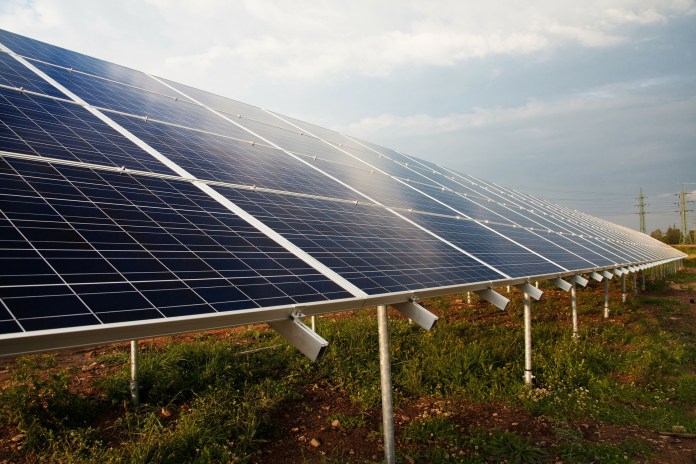
“Spain is one of the countries leading the solar renaissance in Europe,” stated the SolarPower Europe Policy Analyst Raffaele Rossi. In October 2018, the Spanish government officially cancelled the infamous “sun tax”, which hindered and discouraged the development of solar energy in Spain. It is therefore no wonder, that in 2018, 235 MW were added to the national grid. Compared to 2017, the installed capacity increased by 94%.
Since April 2019, the new decree regulating the conditions of energy self-consumption,(“autoconsumo”), has simplified substantially the administrative, technical and financial procedures making renewable energy accessible to the entire population.
This gives homeowners the opportunity to shave off energy costs, besides making some economic benefit through the compensation of excess energy and the favorable tax return benefits that many Spanish State Communities are putting in place. For 2019, the solar industry expects 400 MW of self-consumption systems to be installed.
The meeco Group has followed with great interest the developments in the government and has embraced wholeheartedly this new solar energy trend in Spain.
To date meeco has installed several renewable energy sun2roof solutions for residential buildings in the region of Alicante, among other with the purpose of encouraging customers to shave off energy costs and reduce the CO2 emission.
From the installed systems, we distinguish: • a property in Alicante, where for roof usage optimization, three separate sun2roof solar energy systems were installed and all three are successfully connected and satisfactory producing as shown in the real-time energy monitoring system sun2see. With an average insolation of 4.94 kWh/m2 per day, measured in the last 10 years, Alicante is ideally suited for renewable energy solutions. • another recently completed sun2roof residential project in Elda, consists of 21 top tier solar modules, allocated to two different roofs of the property. Our tailor-made photovoltaic solution, will generate for this client more than 9.500 MWh of renewable energy annually largely covering the owner’s energy demand and saving 5.660 kg of polluting CO2 emission.
”After the successful launch of the PV power plant, I’m very happy to receive clean and sustainable energy for the needs of my family whilst saving on my energy cost” states one of the homeowners.
The clients will have the commodity of monitoring their energy generation and usage with our own developed 24-hour service platform, sun2see. A very complete software showing actual operations and production, enabling the prevention of faults in the performance of our sun2roof solutions, pinpointing and fixing deviations to ensure a smooth operation and a long-term commercial success.
To even go further in its customer service, meeco in Spain, accompanies the clients throughout the entire process of administrative submission and the obligatory registration of the solar self-consumption installations, both at the government institutions as well as the electricity distributing companies in charge of approving the connections.
Canadian Solar Inc., one of the world’s largest solar power companies, today announced that it has completed the sale of a 10.8 MWp operating solar power plant in Izu-shi, Shizuoka Prefecture to Canadian Solar Infrastructure Fund, Inc. (“CSIF”, Tokyo Stock Exchange ticker 9284) for JPY4,569 million (US$42.1 million).
The Izu-shi solar power plant is powered by 30,202 Canadian SolarKuMax modules. It reached commercial operations in December 2018 and has been selling power to Tokyo Electric Power Co., Inc. under a 20-year feed-in-tariff contract at the rate of JPY36.0(US$0.33)/kWh.
Dr. Shawn Qu, Chairman and Chief Executive Officer of Canadian Solar Inc. commented, “We are pleased to successfully complete another asset sale to CSIF. We are confident this transaction will enhance CSIF’s existing high-quality portfolio and provide accretive growth in their cash flow and energy production. The size of the listed infrastructure sector in Japan has more than doubled over the last two years, and along with that growth, CSIF has seen an increase in asset valuations.”
In Japan, Canadian Solar’s late-stage portfolio of ready to build, under construction or operational projects stand at approximately 217 MWp with a weighted-average FIT of JPY36.0(US$0.33)/kWh.
Vena Energy, one of Asia-Pacific’s leading Independent Power Producers (IPP), announced today that the 18-megawatt “Towada” Solar Project has achieved complete commercial operation in November 2019. Capable of producing up to 19,704-megawatt hours annually, the Towada Solar Project features 46,424 photovoltaic modules of 395-watt peak (Wp) each, covering an area of 28.53-hectares in Towada City, Aomori Prefecture in Japan. The Towada Solar Project will be operated by the branch office of Nippon Renewable Energy Operations (NREO), a subsidiary of Vena Energy, based in the Shichinohe City.
“The Towada Solar Project is our 10th project in the Aomori Prefecture, and its addition increases our total operational capacity to 342-megawatts amongst 19 renewable projects across Japan,” said Juan Mas Valor, Vena Energy’s Head of Japan.
“In line with the recent Strategic Energy Plan (SEP) and Longterm, Strategy for Decarbonisation (LTSD) approved by the cabinet, we are committed to facilitating Japan’s transition to renewable energy by 2050.”
Construction began in May 2018, and at its peak the Towada Solar Project created 146 jobs in the prefecture. Achieving its Commercial Operation Date (COD), the Towada Solar Project will supply clean, renewable energy to approximately 3,735 Japanese households per year, while reducing 10,857-tonnes of greenhouse gas emissions and 74,852-litres of water annually.
PROINSO, a global leader in the solar energy market, will represent the UK from Monday the 2nd to Saturday the 7th of December.
The UN Conference on Climate Change will be held in Madrid where more than 25,000 visitors are expected to attend. Institutional representatives, scientists, non-governmental organizations, business leaders, investors and governments from around the world will participate. The objective of this meeting is to share knowledge and seek actions that will lead to the full achievement of the Paris Agreement.
PROINSO will present its latest projects carried out in Latin America and other regions as an example of its contribution to the fight against climate change and its effects.
Case Studies:
3MWp Emsula, Honduras (PepsiCo). Largest solar PV project in Honduras at the time of commissioning. 200kWp La Paz, Mexico (Walmart). Commercial rooftop PV installation using ennexOS energy management platform.
2MW Bus Station in San Pedro (Honduras). One of the largest Bus Terminals in Central America. 1.5MW Quisqueya (Dominican Republic). Commercial rooftop PV installation using SMA Inverters 2.2MWp Laguna, Philippines (New Zealand Creamery) Winner of the 2019 Asian Power Award. 28MWp Teknaf, Bangladesh. Winner of the 2018 Asian Power Award. 492kWp East Sumba, Indonesia. Winner of the 2018 Solar Power Portal Award.
India Reaches Electricity Generation Capacity Of 365 GW: Power Minister
India’s power generation installation capacity has reached 364.9 gigawatts, which is sufficient to meet the country’s electric demand, was informed to the parliament on 28th November, 2019. Besides, the peak as well as energy requirement deficit was less than one per cent during the first seven months of 2019-20, Minister of States for Power and New and Renewable Energy R K Singh said in a written reply to a question in the Lok Sabha. “As on 31.10.2019, the installed generation capacity in the country is around 3,64,960 megawatt (MW), which is sufficient to meet the electricity demand in the country. It may be seen that the gap between demand and supply of power during the current year 2019-20 (up to October 2019) both in terms of energy and peak is less than 1 per cent,” he said. This gap, Singh said, is generally on account of factors other than inadequacy of power availability in the country such as constraints in sub-transmission and distribution network, financial constraints of state power utilities to purchase power. He further said if there is any shortfall in meeting power requirement, distribution companies can also purchase power from power exchanges on a daily basis.
Tamil Nadu Floats Tender For DSM Infrastructure For Renewables
The Tamil Nadu Transmission Corporation Limited has applied for tender for the hardware and software required to set up the infrastructure to facilitate deviation settlement mechanism (DSM) for renewable energy generators in the state. The tender invites bids for the supply and commissioning of servers, hardware, and automated meter reading (AMR) network accessories for wind farms, co-generation projects, solar, among other renewable energy generators. The submission date for the bids is December 18, 2019. The bidders who are interested are expected to pay an earnest money deposit (EMD) of Rs. 3,00,000. Bidders must be manufacturers, authorized dealers, or original equipment manufacturers (OEMs) of servers, personal computers, laptops, and printers with an annual turnover of ₹250 million at least once in the preceding three years. They must have also completed at least one similar order worth Rs. 30 million or more for a public sector unit or government enterprise in the last ten years.
Nemji Solar Aims To Initiate 1 GW Solar Module Manufacturing Unit Next Year
Nemji Solar is a new entrant in the solar segment has declared that it is planning to start operating a 1 GW solar module manufacturing facility by April 2020. It is a Gujarat-based company, which plans to invest around $170 million on the backward integration for solar cell and wafer production, depending on the government of India’s announcement for capital and interest subsidy. It is in plans to spend about $50 million in two phases by 2021 for the 1 GW module manufacturing unit. The company is planning on investing around $500 million by 2025. Nemji also added that it plans to set up projects worth 500 MW by 2025, with an estimated investment of about $280 million. The company added that apart from its own branding, it would be doing original equipment manufacturing (OEM) for a very limited set of clients with long-term tie-ups.
GAIL Applies For New Tender For 1.8 MW Of Solar PV Projects In Madhya Pradesh
The Gas Authority of India (GAIL) has applied for a tender of a cumulative capacity of 1.8 MW of ground-mounted solar power projects to be developed at the GAIL complex in Vijaipur. The bid submission can be done till December 18, 2019. Redesign, engineering, procurement, supply, construction, erection, testing, commissioning, and complete operation and maintenance of the two projects of 1 MW and 0.8 MW capacities, respectively, are the scope of work. The two projects will be constructed simultaneously for captive use only. As per the tender document, prospective bidders will have to pay Rs. 2 million as the earnest money deposit (EMD). The given time for the completion of the project is 8 months. Regarding the technical criteria, the prospective bidders should have prior experience of installing grid-connected ground-mounted solar power projects of a cumulative capacity of at least 5 MW that have been successfully commissioned during the last five financial years.
Haryana DISCOMS To Allow Net Metering Until Rooftop Solar Capacity Reaches 500 MW
The Haryana Electricity Regulatory Commission (HERC) has updated its regulations for rooftop solar grid-interactive systems based on net metering in response to a petition filed by the Haryana Renewable Energy Development Agency (HAREDA). HAREDA had filed for a petition seeking amendments in its regulations from 2014, to help them meet the Indian government’s solar targets. It stated that it could not meet these targets without net metering facilities, and the existing regulations did not have the provisions for it. The petition asked for the regulations to be amended so that with the net metering provision, consumers are allowed to sell excess generated power back to the utilities. It also sought for the cumulative capacity of the rooftop solar systems at a distribution transformer to be allowed up to 100% of its particular distribution transformer capacity. The petition also expected regulations to allow consumers to set up solar projects higher than the sanctioned load if they have space and the capacity to do so. It also sought for open access consumers who plan to get rooftop solar projects in their premises to be allowed to use net metering facilities.
Indian Railways Aims 500 MW Of Rooftop Solar By 2021-22
Indian Railways which consumes the major electricity with about 2.4% of total consumption, is planning to install 500 MW of rooftop solar generation capacity by 2021-2022. Minister for railways, commerce and industry, Piyush Goyal, told the Lok Sabha lower house of the Indian parliament 95.67 MW of solar rooftop capacity has already been installed on railway buildings, including 835 stations, and a further 248.46 MW is under development.
Howrah Stations Light Up With 3 MW Solar Power
Many of the lights present in Howrah station do not utilize the conventional energy. Howrah station is known to be the busiest railway station in the nation, has now emerged as the one with the largest commissioned solar capacity under Indian Railways. The Eastern Railway has commissioned a 2,965 KWp grid connected rooftop solar power project at Howrah. They are also planning to utilize more and more of renewable source to contribute to the go green mission and also save expenses. These steps come after the ambitious plans to achieve the Mission-300 MW Rooftop Solar Power Plant by 2020. According to Nikhil Kumar Chakraborty, CPRO, ER, this will generate alternative source of renewable energy that will take care of nearly 15% of the total energy consumption in non-traction areas. Out of the 180 million units consumed annually, 30 million units will come through such sources. Currently, 55 MW rooftop solar plants have been commissioned across ER. The process is on to install additional solar power plants that would generate 245 million watts at different locations.
Mahindra In Final Lap To Sell Solar Portfolio
Mahindra Group’s, Mahindra Susten the renewable business arm has got a binding offers from CLP India and the Piramal group for its 160 MW solar assets. Mahindra Susten is expected to take a call on the two offers over the next few weeks. “The sale is part of the company’s plans to sell completed projects and recycle the capital to develop its project pipeline,” added the person who requested anonymity. CLP India and the Piramal Group had shown interest in buying Susten’s solar portfolio. The transaction could fetch over Rs.1,000 crore. Mahindra Susten, which builds and sells solar power projects, offers diversified services within the renewable energy and cleantech space. The company has commissioned over 967MW till date, and has over 668MW of projects under execution.
Eastern Railway To Generate 30 MW Solar Power By 2020
This came in the efforts to limit the carbon impression and contribute for the decrease in global warming the Eastern Railway declared that it has set a target to produce solar power of 300 megawatts by 2020. The Easter Railway is focussing on using solar power to its maximum, hence it has decided to use solar energy from 30 MW in 2018 to 300 MW in 2020. Nikhil Chakraborty had quoted that achievement of the goal of generating 300 million units (30 megwatts) will accrue a saving of Rs. 12 crore in revenue expenses per year at present rate of tariff. The Eastern Railway has commissioned 2,965 kilo watt power grid connected rooftop solar project at its busiest station Howrah, which “is the largest solar capacity commissioned over a single station in Indian Railways”
SOFARSOLAR is a top 5 Grid tied string inverters manufacturer for rooftop and utility projects. Our inverters have been well accepted in UK, Netherlands, Italy, Australia, South America, Middle East, KSA and India. SOFAR is very pioneer group in GPS sector in China & we like to accept new challenges in the market. So we have started PV market business & we are doing business globally successfully. In order to support the current growth of the Indian PV market, SOFARSOLAR has recently taken steps to strengthen its business position in the country with a new office and leadership. Looking to expand its footprint in the Indian PV market, SOFARSOLAR, added an office, warehouse, service staff and is expanding the team.
As a high – tech international corporation,
SOFARSOLAR is equipped with leading technology of grid tied inverters. The
R&D team of SOFARSOLAR has strong development capability. Around 100
experienced engineers are working with more than nine series products. And
around 400 employees in factory increased our production capacity to 8GW
annually
From day one our company has put quality as
the most important criteria in our design, production and daily operations. Our
international R&D team designed the product from bottom up. We hand-picked
each component and we have drew every bit of the circuitry. Therefore we
understand exactly how the device shall perform in every situation. We sourced
all our electronic materials from U.S., Germany and Japan, such
as Fairchild, Infineon, Texas instruments, Panasonic, Nichicon, Tamura,
Microsemi, Amphenol, Sanyo. We are certainly not the cheapest inverters
you can find in China. But if you consider quality is important, you will not
regret to work with us.
New versions of
Inverters which are very compact in size make SOFARSOLAR differentiate from
others.
SOFARSOLAR is
positioned to play an important and leading role in the Indian solar industry. Having global experience, innovative solutions, and dedication to
developing a local presence, SOFARSOLAR is well poised to support the Indian PV
market in its rapid growth. SOFARSOLAR recent move to strengthen its position
in the Indian PV market with a local team signifies our commitment to the solar
sector in India.
We are continuous growing company and we have
variety of products like New Energy Automobile (Supercharger) products & Hybrid
Inverter, Storage Inverter & On Grid string inverter developments in our
basket.
To cater to the Indian Market we have established ‘’Sofarsolar India Pvt. Ltd’’ our Marketing and Service Center in Ahmedabad, Gujarat.
Our range of gird tied inverters include 1KW to 6KW in single and 3KW to 70KW in three phases, Support zero export solution . We also have 3kW power storage inverters and 3-6kW hybrid inverters in Single Phase & 10-20kW hybrid inverters in Three Phase, Li-Ion Batteries.
We are Providing service directly through the company & also supporting through our local business partner. We have well qualified B.E Elect. Team so we are very confident & conscious on service point of view. We have repairing center in Ahmedabad-Gujarat , so many inverters are repaired in our service center & prompt service response is our motto in our business agenda.
For the first time in India we started 7 years warranty in 2018 and now we are coming with 8 years warranty in India.
The Indian solar
energy segment is considered to be a market with one of the fastest growth
potentials in the world due the country’s ever-increasing demand for energy.We
are having very effective “TOP POSITINING” market in Gujarat, Punjab-Haryana,
Maharashtra and Chennai-Kerala. Now we are more focusing on North India &
North-East India region. Even though we have good installation based in
North-East region remote area.
SOFARSOLAR
inverters installed more than 28MW in SKY PROJECT-GUJARAT. SOFARSOLAR have another more than 20MW
projection for Coming SKY PROJECT (KUSUM YOJANA)Scheme.
SOFARSOLAR is a biggest installer as a Top position in SKY PROJECT Scheme.
SOFAR inverters
are installed in the farms under SKY PROJECT (Surya Kisan Yojana) initiative of
GUJARAT Government at different Feeders covering GUJARAT region.
In this Project SOFAR 6.6KW to 70KW Three Phase models installed with compatibility of synchronize with three phase motors, Communicate with data loggers via RS-485 and various grid voltage ranges.
SOFARSOLAR systems have been installed on the buildings of prestigious Business buildings, Industrial’s Slanted roofs, Local houses under guidance of Rooftop Policy and Commercial Projects in India.
Rooftop Installation
Slanted Roof Installation
We have received
repeat orders from local business partner, Big EPC companies, OEM techno giants
With a complete portfolio of 3-phase commercial DC optimized inverters.
SOFARSOLAR is
continuously winning most selling Inverters in Gujarat under GEDA rooftop
policy & other state also good quantum installation database with prompt
service support.
SOFARSOLAR is well
positioned to become a major player in commercial roof-top &utility-scale
PV installations. Successfully
installation database in Zero Export facilities & 25 years data history SD card
facility.
We believe in local sales-service support
with Longvision Reliable
Product Business Policy.
Risen:
Risen Energy Co., Ltd. was founded in 1986
and listed as a Chinese public company (Stock Code: 300118) in 2010. Risen
Energy is one of the pioneers in solar industry and has committed to this
industry as a R&D expert, an integrated manufacturer from wafers to
modules, a manufacturer of off-grid systems, and also an investor, a developer
and an EPC of PV projects. Aiming to deliver the green energy worldwide, Risen
Energy is developing internationally with offices and sales networks in China,
Germany, Australia, Mexico, India, Japan, USA and others. After years of
efforts, it has reached a module production capacity of 9.1GW. While growing
rapidly, Risen Energy keeps a stable pace with an average debt ratio at around
60% from 2011 to 2018.
Risen Energy has lots of PV power stations
around the world, including Germany, India, Australia, Mexico and others. All
the projects are successful and appreciated by the customers.
For example, the 40MW project in Kazakhstan.
It is the first privately-owned enterprise investing in the construction of
photovoltaic power stations in Kazakhstan, the implementation of the project is
of milestone significance for the solar panel maker’s global roadmap.
The facility, located in Gulshat, Aktogay
District, Karaganda Region of Kazakhstan, has selected 325W Poly 1500VDC
polycrystalline modules for their ability to ensure the long-term and stable
operation of the station to the maximum extent possible. With the successful
grid connection, the power station is expected to generate 50 million
kilowatt-hours of electricity per year, providing continuous clean power to
local households.
In order to successfully achieve the
construction of the power station in Kazakhstan, Risen Energy had to overcome a
series of obstacles including the language barrier, cold weather, difficulty in
assuring the needed supply of materials, power grid design, among other factors
that hobbled the progress of the project. Thanks to the rich project experience
accumulated by the overseas project development team over the years, the
company prevailed by insisting on orderly construction despite the severe cold,
ensuring the smooth completion of each aspect of the project.
The project held its groundbreaking ceremony in June 2018 and connected to the grid in December 2018, fully reflecting the strength and efficiency of Risen Energy’s workforce. As a result of designing and building the 40MW power plant, Risen Energy has a comprehensive understanding of the market and regulatory environment in Kazakhstan. The replicable construction experience is expected to help overseas teams to better participate in the development of follow-up projects. We also hope to use this as an opportunity to help more Chinese brands effortlessly enter the Kazakhstan market, share in a piece of the pie, and contribute China’s prowess across the sector to the cause of global green development.
MyWay:
The Renewable Energy Strategic Business Unit Ravi Renewable Energy and Lighting (RREL) has a Distributive Renewable Energy (DRE) platform called MyWay Solar. When it comes to developing rural India, MyWay extends hands to support rural areas to provide a sublime life. The Company started its journey with village electrification and solar pumping system 4 years ago, and within these four years, the company has installed more than 16,000 solar pumps, 26,420 solar home lighting system, 6MW ground mounted projects, 15,000 solar streetlights and more than 4MW rooftop projects.
Based on our rapid business growth this year, we keep our footprints in Maharashtra to install more than 18000 nos. solar pump associate with a partner company. It will create history where thousands of farmers will be benefitting from this collaboration. In addition to creating record, this project will add a feather to our national solar mission.
We are on a mission to not only help the farmers develop their expected result, but also hope to install in them the values that will allow them to work harder, innovate and produce more and more crops so that they can improve their lives in all aspects.
MyWay firmly follow the concept of make in India, and have multiple business partners across the country for efficient project management, on time project execution and round the clock maintenance support for Solar PV Systems.
MyWay is committed to giving their all in the betterment of the Rurban life so that it would lead to a growing and a prosperous India.
To promote renewable energy and help use the cost-effective electricity in Vietnam, KSTAR provides smart PV solutions for homes and businesses.
KSTAR inverter KSG-5K-DM is launched recently for the Vietnamese market to meet the requirements of the local residential in Bien Hoa City, Dong Nai Province, Vietnam. For the PV installations, this provides a special 2MPPT solution, which is reactive power controller, digital controller, high efficiency and high reliability. The residential PV project is a new step into the new energy market in Vietnam, but will continue to expand in the near future.
Vietnam is2019’s surprise gigawatt market, whose solar growth is very impressive into the next decade, like high solar irradiation levels and strong policy support. The government is targeting 12 GW of solar capacity by 2030 and is offering incentives to attract foreign investors. Such policy support will make Vietnam an attractive prospect, according to PV-Magazine report.
Vietnam is an important market for KSTAR. To make solar power more accessible, KSTAR has announced the formation of a wholly owned sub-subsidiary, Kstar (Vietnam) Co., Ltd, in Anyang County, Haiphong City, Vietnam through its wholly-owned subsidiary, Kstar (Hong Kong) Co., Ltd. with a registered capital of 5 million US dollars on 24th August,2019. KSTAR (Vietnam) Co., Ltd will devote to the R&D, production, sales and technical support of data center and solar inverters. The company will occupy 47,715.34 square meters of land.
With KSTAR team’s strong support in Vietnam, the customers and the system owners will have more opportunities to achieve their low carbon ambitions through the installation and commissioning of PV projects. We aim to maintain better relationships with old customers and new customers, nurturing those ones and creating new ones to increase market share. In addition to offering a favorable PV solution, KSTAR hopes to accelerate rural electrification, as economic progress often depends on the availability of electricity.
“To meet the different local clients demand by providing them with better service in Vietnam, KSTAR has introduced comprehensive turnkey MV solutions. With Max. PV voltage up to 1500V, KSTAR is ideal suited to coping with the electricity demand of large-scale centralized PV power plants, which maximizes your system self-consumption and save your electricity bills. The turnkey MV solutions combines LVRT/HVRT/FRT function and modular design for easy maintenance , including Max. efficiency up to 99% and full power output under 50℃, which greatly demonstrates its maturity and meets the world-class standards.” Says the technical manager of KSTAR.
Mr. Abhishek Verma, Vice President – Marketing & Projects, Kotak Urja Private Limited
Currently Indian Solar Sector is at loggerheads with State’s Solar Policies over the issue of Net Metering/ Gross Metering and now new connotation “Net Billing “ is popping up, proposed by MERC in their recently released draft policy. Under DCR content, recent MNRE’s push to use mandatorily Indian manufactured solar cells in Indian make PV modules, has pedaled down to its almost crawling stage as by all calculations the overall capacity of Indian manufactured Cells (processed through right from undiffused wafers) are well falling short against in-house Indian PV Module manufacturing capacity and hence objective to support Indian Solar Sector vide DCR push is falling flat. Investor/Developer sentiments are down because of these inconsistencies and also because of lack of financial support/mechanisms from Banks and Institutions. Government is pushing E-mobility without fixing its basic infrastructural requirements.
E-mobility should be encouraged with the utilization of solar energy. Urgent Policy action to incentivize storage solutions needs to be formalized, if India has to emerge as a Storage Hub, we need to act now.
As of June 2019, we have achieved about 31% of the total target set forth by The Government. Breaking it down further, installed rooftop solar comprises a mere 3.5% of the total target. Coupled with the above mentioned roadblocks, the bigger issue lies with the States and State Nodal agencies, who are working independently and dictating their own policies. In order to maintain the trajectory, we need “ONE NATION, ONE POLICY” (like GST) with a single window clearance. It’s high time that this is addressed and steps are taken to align policies, infrastructure, manufacturing and financing, else, we will not be able to maintain this upward trajectory to meet the goals set by the Government of India.
Mr. K. R. Harinarayan, Founder and CEO, U-Solar Clean Energy Solutions Pvt. Ltd.
To put it simply, yes. The upwards trajectory of the Indian solar sector can be sustainable. In brief, it boils down to the existence of demand and prevalence of supply. Let us explore the demand. As solar has become economically feasible, since it reached grid parity, there is a clear business sense in adopting the clean energy technology. Additionally, due to the increasing awareness on climate change there has been a growing interest in clean technologies ie. solar energy systems. There are no issues in the perspective of technology adaptability; as it is cost effective, has clear energy savings as well as an impact to mitigate climate change. One of the many contributors to climate change is the use of unclean energy and solar is a much cleaner alternative that directly mitigates those effects. There is, therefore a definite demand for solar in the Indian market. In terms of supply to meet this demand India has in place a vast ecosystem of developers willing to take up these projects.
At U-Solar for instance, we have the expertise and capability of serving clients across India to provide them with customized solar systems. As we develop new innovative projects, it is evident that our market share is increasing year on year. Having said that, the biggest challenges in solar adoption in India are regulatory in nature. Although on the one hand the central government advocates a grand vision for solar adoption, on the other hand the state governments create regulatory obstacles for developers to operate. Policies such as the implementation of gross metering, a cap on total solar capacity allowed, cross-subsidy charges, anti-dumping duty for solar panels and many more are creating bottlenecks in the growth of the solar sector. This is however, something that we hope will evolve and stabilise over time.
Mr. Manish Asija, CEO, enPossibilities Private Limited
Solar power has established itself as the preferred choice globally over the last one decade. The geographical location of India offers supportive grounds for the solar industry. India comes under the tropical region, which receives enormous amounts of solar radiation all through the year, which approximately counts up to 3,000 long hours of sunshine. MNRE estimates show that India’s solar potential is greater than 750 GW.
Recent bids in India have proven that solar power is going to grow as the costs can now compete with any other conventional source. Costs for setting up solar projects has dropped by about 80 per cent between 2010 and 2018 (IRENA analysis).
India is one of the fastest growing economy, the per capita consumption of power is going to grow further with increasing urbanization and demographic expansion. Adoption of EVs is an upcoming wave, poised to tilt the equation towards bigger demand supply deficits.
Sector has witnessed a slowdown in the growth rate of capacity addition, especially during the last one year, this is primarily attributed to the ill-conceived policies, few instances of disregarding the signed and committed power purchase agreements (PPAs), serious land acquisition crunches and delays in strengthening the transmission infrastructure. Another major concern is the liquidity position in the market. The delays in receipt of payments and often generation curtailments from discoms are adding to the woes of solar developers, thereby affecting the investor’s sentiment adversely.
Strong goals will continue to be crucial in pushing the growth of solar sector in the country. If Indian solar sector has to maintain the upward trajectory, it need favorable policies along with how effectively the sector mitigates risks, like, timely implementation of improved forecasting of renewable power as well as demand, alignment of national and state level policies (with their implementation plans), added emphasis on development and operational management of storage technologies, increased flexibility of generation fleet, expansion of transmission corridors, demand side management, developing domestic manufacturing capability and O&M support.
The modular nature of solar can contribute in the penetration of rooftop solar in domestic installation. Flexible financing options for individuals to install rooftop solar would support a faster adoption of solar energy and make it more available, accessible and affordable.
Rishikesh Mishra, Area Manager-Solar Development, Arunachal Pradesh Power Corporation Pvt. Ltd.
Government has set up massive goals for solar power generation, Solar share being 100 GW out of 175GW from Renewable Energy. As it truly has a large potential for renewable energy and the in the coming years, India is set to be one of the largest solar power producers with the generation being used across Homes, Industries, agriculture, etc. Northeast being part of the journey keeping feet’s forward in achieving so.
The total capacity of Solar installed in India till date is nearly 40 GW and out of which 4 GW is Rooftop Solar Plants. In Northeast the need is to go for Maximum Rooftop Solar’s as the land over are here majorly fertile, giving very rare pieces of waste land in the all 8 states in Northeast. We need to actively increase the Rooftop installations overall, and Northeast can be a part of this as plenty rooftop are available with needs that can be fulfilled with Rooftop Solar’s easily. Such example is, Govt prepared and marching the people of NE with having targeted solar power capacity expansion of 590 MW by 2020 in the state of Assam by means of multiple models of solar power generation. And so forth for the other NE states.
Coming to rooftops, Roofs (typical Assam-type house commonly built in North-eastern India, due to weather and rains) are easily available with Metallic sheets, so the installations time is also less and easy to go for the Rooftop Solar. Peoples are needed to be educated more about solar and it is successful in NE too. Government have also worked since long for promoting Rooftop Solar to maximum extend through GOA/SNA’s/DISCOMS , and it can be seen in the tenders floated by the State’s major of them being Rooftop ones in every states of NE region recent examples are Assam state have floated tendered (Awarded & To Be Awarded) an approx of 17 MW as of Rooftop plants (On grid & Off Grid combined). Meghalaya actively working in the same with an approx. capacity of 6 MWp in the next coming few months rest of the 6 states too working fiercely with large rooftop solar installations.
Along with this large ground mounted projects are also being constructed where after evaluating every factors it was found that the installations are possible for benefits of the state and peoples, like in Assam already foundation stone of Ground mounted 70 MWp have been laid, Plant of 100 MWp & 25 MWp Capacity have been tendered in Assam to set up in OPEX with 25 years PPA. Other states too working on identifying such places where Ground mounting large projects will be feasible keeping in mind the environment.
The capacity of the solar parks shall be 500 MW at least for General states as per MNRE. However, smaller parks are also considered in States where there is shortage of non agricultural land like NE states, thus making it possible to implement these projects.
With PM KUSUM schemes being promoted, Farmers involving themselves (No. of farmers is large here) is the most important part so that benefit provided by the government is well utilised by them, utilising the power required for water pumps in day by Solar as the agricultural activity is carried out during day , helping in better progress of them with state progressing, further reducing T&D losses.
Along with this the projects floated by GOI & States have been working on Health centres too to get them with Solar Powered with energy storage for emergency situations/ blood banks, on Police stations and other needy places. As north-eastern states are always surrounded by natural calamities / heavy rain the tress is there a lot & make damages to the power lines and thus creating issue for short while no matter how hard the Power department works day in day out.
And other alternatives are also looked upon, like there are large water bodies in NE. And tapping the power from Floating seems to be a viable option too when we have land constraints. Some pilot floating plants have been installed, and recently APDCL (Assam Utility) has also floated tender for floating solar, and there is huge capacity to be tapped from floating in NE. Once installed these projects will further speak themselves with live examples and further implementations in other states/places will be much easier.
Furthermore, local developers need to come up to be a part of this green energy movement – Install, Manage and Operate these plants to its maximum efficiency. Skilled labours are needed to be devolved more; they will be the main backbone to run these plants in long run effectively. And continuous investment in the technologically advanced components like focus on MPPT Inverters/ Structures/ Higher efficiency Modules are needed to get the best generations & to decrease the BOS costs and make the whole exercise to be fruitful. In addition, net-metering regulations have been notified by respective state regulatory commissions of these States & Rooftop solar policies have also been notified by States. Making it easier to implement the projects, constant support like this is needed from the Govt end to make it possible.
Thus, clearly northeast is marching toward the green movement will increasing its Solar PV Plant capacity and complementing its title of “where sunlight hits first in India” with starting the solar generation of the day in India.
Mr. Bhaskar Kakoty, Co-founder & Director, Free Power Technology Private Limited
Fever of ‘Solar’ is gradually taking momentum in the North East, although it is still behind the national average. The state nodal agencies are taking initiatives with the schemes (subsidy) from MNRE to increase The and popularize the ‘solar rooftop in the north east’. Almost every states in the north east are working on solar rooftop and other solar projects. However, the achievement ratio of these schemes need further improvement. The major factors affecting the same are –
The ecosystem needs to develop further. The grid power is very erratic in most of the places except for the capital towns. This is a challenge for promoting ‘grid-connected solar rooftop’ where subsidy is available today. The users in those places looks for an ‘off-grid’ system but non availability of subsidy in ‘off-grid’ works as a deterrent factor. Therefore, the subsidy should be extended for small off-grid system (up to 5KW max.) ELSE the Govts./ DISCOM should ensure stable grid so that public can take benefit of MNRE subsidy.
Resources – availability of trained manpower, local warehouse, good quality mounting structures (GI), DC cables, connectors etc. are very critical factors for its growth.
The awareness among people is one major factor. Due to the weather conditions there is a perception that solar solutions cannot work properly in NE. But the fact is that the average Solar Insolation/ radiation of NE is 3.5 to 4.5 kWh/m2 /d per square meter. This is lower than the national average but higher than many countries in the world who are effectively using solar energy today. So there is a need for creating awareness by way of commercial advertisements, exhibitions etc.
Awareness and availability of finance are two very important factors in the growth of industrial and commercial solar rooftop in NE.
Mr. Aakash Garg, CEO, Natsakee Incorporation
The most relevant factor that have ruled Solar Rooftop Installations is size of Government Procurement. Though recently small number of projects have come from private sector but they mostly have been from big Industries who installed them as a part of their centralized procurement. So, Government has to include more renewable energy projects in their procurement.
A large scale public awareness campaign from all stakeholder could boost the movement which is missing till date.
Increased availability of skilled man power will remove the hindrances faced in a quality solar system installation. Also being a solar technician will become a source of mass employment in the region.
Government’s emphasis on ON GRID system should change to Hybrid Systems specially for northeast Region as the region have an acute power shortage.
Further, Technical specifications should be different with higher module size for the North east due to less solar irradiation hours in the region. This is an important factor as with reduced module wattage, batteries do not charge and most systems fail in course of time.
I would also like to suggest Government to allow 50% of the allowed subsidy to Commercial and Industrial Sector in Northeast Region to promote Solar and other renewable energy sources. It will act as a catalyst for mass installations in the region. Local Discoms can also allow a rebate on electrical tariff to people installing solar rooftops without subsidy including both residential and Industrial beneficiaries to promote the installations.
Mr. Ujjal Das, Director, Arohan Power and Energy Pvt Ltd
We have seen that in recent years the growth of solar energy domain in North East markets had been phenomenal due to active support shown by government policies including Subsidized solar system installation programmes.
There is an utmost need of increase in Domestic manufacturing units of raw materials, components and products to cut down import duty expenses on PV solar modules. There is also a lack of closer industry government co operation for the technology to achieve scale.
Newly incorporated enterprises / entrepreneurs should be given a platform to be empaneled by the Government.
Increase in state’s Investment in research and development of this technology would play a vital role towards the goal.
Focus should also be given to solar power park. State should also boost solar projects spread on the canal Branches of our mighty river.
Mr. Manas Das, Director- Sales, Green Shade Consultants
It has been seen that, the Northeast India has been adopting renewable energy at a very fast pace. India as a hole is also emerging in the global arena as a leading producer of renewable energy. In its efforts to move further towards sustainable development, the government of India has set certain target to achieve by the end of 2022 and Northeast India too is contributing its part to this national target.
The solar journey stated at Northeast start a little late then the other state, whatever the reason was, but today northeast India is all geared up to give a better and greener energy to the people of this part of the country. To make solar energy popular among the masses was to make the people understand how easy and effective it is to generate power and the best way was to show them how power can be generated from their own roofs, this is how the journey started at northeast with all the Nodal agencies of all the northeast state started working hand to hand with MNRE and stated to promote and generate solar power from rooftops, Nodal agencies in the state of Assam, Manipur , Meghalaya had been quiet instrumental in making rooftop solar reach to the masses and efforts are on to further make it big, that day is not far off when we would see solar power run northeast.
Lots have to be still worked into to make Rooftop solar area, it has been seen that EPC contractors in northeast has to get each and every thing from outside northeast which is time consuming, extra money needed on transportation, geographical weather constrain, that’s the reason why northeast India need manufactures that can make materials ready to contactors on time and better price. More financial institutions should come forward to give financial assistance to customers in for of loan to set up RTS plants at nominal rate of interest. All these state has subsidies offered up to 70% in residential, Institutional and social sectors, but that not enough certain subsidy should be offered to the industrial sector as well, so that bigger rooftop plants can come in.
The tomorrow looks very bright for northeast and with so much of effort going in by the people of this part of the country northeast will lit bright and contribute its part to the notional building.
Mr. Harsha Kuntur, Managing Director, EcoSoch Solar Pvt. Ltd.
Karnataka has installed 221 MW on solar rooftops, of which most of the installations are in Bangalore. As per the local Electricity Supply Company in Bangalore, there are only 1800 solar rooftop buildings in the city, even though the cost of solar panels and inverters have come down dramatically in the last four years.
A major part of it is due to the frequent change of state and central solar rooftop policies, which has created confusion among developers and the consumers. Recently, MNRE has announced subsidies for solar rooftop systems for domestic consumers, but the framework to implement the subsidy scheme has not been formulated yet, causing many end-users to differ their installations for future dates.
Second, solar consumers who had experienced long procedural delays during commissioning or getting their monthly billings are reluctant to recommend to their neighbours to go for solar. it’s important to instil confidence in end consumers that there won’t be any administrative hurdles from DISCOM in commissioning and smooth operation of the plant.
Thirdly, for many who are interested in solar, but don’t have a suitable roof should be given an option to go for virtual net-metering, in which group of consumers collectively own a solar rooftop system installed elsewhere, but their electricity bills will be pro-rata credited. Fourth, all the new service connection meters to be configured for bidirectional energy measurement with or without solar. This could improve solar commissioning from 45 days to 10 days.
Lastly, Indian banks have been reluctant to give loans to the Solar rooftop domestic segment. Most customers expect loans to be collateral-free like that of car loans.
In order to achieve the target of 2022 and beyond, MNRE and state government should take a more comprehensive approach to incentivize the state ESCOM’s and banking sector to promote solar rooftop systems.
Mr. Mux Narasimhan, Founder and Director, Play Solar
First and foremost we need a consistent policy with unwavering support to increase rooftop penetration. This means a longer term policy with a 7-10 year horizon and not a yearly PPA price update that gets invariably delayed by 3-5 months (March to August) which are prime solar months. Solar is seasonal business and typically July to October business is dull in India due to monsoon rains. This leaves very little time in a year to do business. Also the subsidy announcement by MNRE has put the market in flux as the subsidy delivery mechanism, approval process and timelines are still not clear. So the market is now on a wait and watch mode until clarity on subsidy is given.
Meanwhile many MSME solar companies have closed down due to lumpy business and lack of working capital support. Specific support for MSME system integrators need to be
in place to both prevent unqualified players from entering the market and also give the right incentives for qualified players.
Second on the implementation side we need the grit to remove all roadblocks at all cost. This calls for a 100% transparent online process with committed timelines from application to interconnection approvals. This is being implemented now by BESCOM after ironing out several kinks.
We need a policy to be a clearing to let the market forces have it their way rather than a policy and implementation paralysis with stumps growth. The expectations on Karnataka and Central government to fix these kinks are high as the clock keeps ticking. Karnataka government has always been pro-business and pro-environment and needs to continue a leadership role in increasing rooftop installation by closing down these issues as soon as possible.”
Mr. Srinivas Kumar, MD and CEO, RenXSol Ecotech Private Limited
Solar Rooftop installations comes in different applications and variants for homes, apartments, offices and industries. Most common are the grid connected rooftop solar system which works in sync with utility or distribution company grid and supports the user through notified policies as net metering or gross metering. Another alternative is off-grid system wherein batteries are used to store the solar energy and then this electricity is utilized any-time during the day or night and is used more in suburbs of cities or interior towns where electricity utility supply is weak.
Future technologies: Newer system technologies are there now, which work without requiring battery reference or grid reference for generating solar power for loads, making them cost effective. These will be the change of tomorrow over time making user independent.
Market drivers: However, to enable this market grow faster newer drivers should be considered for marketing other than government subsidies or net metering/gross metering incentives. The government should only give permission to sync with grid. Thereafter, the driving force should be marketing, with focus on –
Focus on savings on electricity bills for marketing tool, as return of investment at prevailing tariffs is about 5 to 6 years for residential and under 5 years for industrial.
Focus on savings against future increase in electricity bills improving return on investment.
Focus on protecting the environment, reducing carbon emission reduction at power plants important for future healthy life of our children.
Focus on helping the country’s economy as by making an investment decision it also helps industry
Focus on enabling such saved energy being made available for use by farmers and other users who are short of it.
Focus on quality products and services long term and helping Indian companies.
Focus on using solar for standalone powering of future electric vehicles which is a tremendous opportunity for entrepreneurship and solar industry.
The above will enable this sector grow faster with higher acceptance and making homes and industries self-reliant, and farmers having better access to power as energy saved is energy produced.
Nazeem Kudligi, CEO, Kamati GreenTech
The below points are suggested after having faced practical difficulties as a Solar EPC Entrepreneur.
The solar water heater industry is enjoying a steady business . One of the reasons is that the BESCOM ( EB) doesn’t give an Energy Meter without a tax invoice of a MNRE approved Solar Water Heater. The same should be applicable for Solar Rooftops
The paperwork should become simple. Just one application form should suffice
The above rules could be exempted for houses smaller than 1000 sq feet
Mr. Shashikiran N.K, Managing Director, Arushi Green Energy (India) Private Limited
As a Solar Industry veteran who has seen and participated in the growth of Solar PV in Bangalore and India, I have a few important concerns that have to be addressed to further grow Solar Rooftop.
Solar industry is not alone in facing the tough credit scenario in the country. Solar Power Systems financing from Banks suffers one important impediment. The impediment is the insistence of Banks for collateral security for the solar loan.This affects both the Industry that wants Solar on its rooftop and a Solar Power provider who can do this as a service. So asking Banks to extend Solar PV systems loans on the system itself as a Primary security and no collateral will be a huge boost.
2. After the above suggestion of Solar Loans without collateral is accepted, then a second factor that will boost Solar Rooftop is the ‘Renewable Power Obligation’ of consumers that will mean that Industry will have an additional reason to install solar Rooftop. Without making available Funding to install Solar rooftop to burden Industry with ‘Renewable Power Obligation’ would be very unfair.
3. The Government has a wonderful scheme called the Phase II- Grid Connected Solar Rooftop Programme by which there is a ‘Central Financial Assistance’ to residential sector, but the building owner has to apply to local Discom for the subsidy and the DISCOM will pay the approved ‘Solar EPC’ (Installer) the Subsidy, the building owner pays only 70% of the cost. The catch here is the approved Solar Provider or installer who has to win the bid for price. The red tape on this and selection based on price alone makes one deeply skeptical that such a scheme will succeed. A switch to “Direct Benefit Transfer” to the building owner based on the “Approved Cost of Solar system up to 3 KW would be the ideal solution.
Mr. Ravi Kumar PVN, CEO, Dexler Energy Pvt Ltd
Karnataka state is a pioneer in introducing policies that encourage renewables and the rooftop solar segment is no different. One of the earliest and most rewarding programs for setting up grid connected rooftop solar began in Karnataka. Despite this great policy incentive, the growth in capacities is nominal compared to the potential available. Karnataka currently has 215 MWs of rooftop solar and Bangalore accounts for 125 MW of that. BESCOM intends to achieve installed rooftop capacities of 1 GW by 2021-22. It seems unlikely at this stage but not entirely impossible. To make that happen BESCOM has to take the lead.
Changing the paradigm The distribution company employees’ outlook has to change with regard to encouraging rooftop PV installations. It is pertinent to note here that a study conducted by CEEW has concluded that there is a net positive benefit in terms of revenues for distribution companies when consumers set-up rooftop projects. For a start, a similar study can be commissioned by CEEW or other research agencies for BESCOM to see how it can help improve operations and revenues for BESCOM. This should bring about a drastic change in the way BESCOM or the other Escoms in the State perceive rooftop additions.
Demand origination The biggest challenge that Banks face in approving loans or RESCO operators face in taking up projects which are sub-scale is the fragmented nature of the roofs and profile of consumers. BESCOM has a natural advantage of being the service provider of first resort to a majority of electricity consumers in its jurisdiction. So BESCOM can take a natural lead to aggregate demand for such RESCO or EPC players. State government buildings, BESCOM’s own buildings including its sub-stations, Courts, Municipalities etc., are all low hanging fruits. BESCOM can also encourage industrial clusters or large apartment complexes to approach it to procure or run a process on their behalf.
Awareness and Policy certainty are the two other very important factors that BESCOM has to ensure. It should conduct awareness programs in different geographies of its jurisdiction. Consumer forums should be provided material to be distributed across, Banks can be encouraged to set-up loan melas near BESCOM offices to provide loans to residential consumers for adopting solar. BESCOM can list and advertise frequently the list of approved service providers or RESCO players through whom consumers can purchase equipment or services for rooftop solar. Policy certainty on net gross metering options and connectivity approvals ensure that all stakeholders know what to expect when they set-up the systems. This will help estimate accurately the benefits both long an short term of setting up such systems and this will encourage consumers to embrace solar more confidently.
The India power sector offers almost unparalleled
opportunities to both domestic and international energy sector players. And
some 8,000 of these influential decision makers will come together next May when
POWERGEN India, Indian Utility Week and DISTRIBUTECH India open their doors in
New Delhi.
Since the announcement of these events
earlier this year, the 17th annual POWERGEN India, the region’s
premier power generation conference and expo, has gathered fast-paced momentum. Excitement is also building around
Indian Utility Week and DISTRIBUTECH India, with the creation of a combined
event that covers the whole power sector value chain.
Managed by ITEN Media, in
partnership with Clarion Energy, these co-located events will be spread over more
than 11,000 sqm, with more than 250 exhibitors, including some
of the biggest names in the domestic and global power market.
One of them,
Constantin Klokkaris of Aero Solutions, says that India is “one of the largest
thermal power markets in the world – and it remains one of the markets in that
sector that is still growing”. He added that the experiences and technologies
from European and Asian markets would flourish in an Indian sector thirsty for
greater efficiencies in its thermal fleet, and this made attending POWERGEN
India an unmissable opportunity.
And Jake
Waterhouse of DEKOMTE stressed that “India is a key market – and also a
changing market. With the onset of more renewables, many plants need to cycle
more frequently. So POWERGEN India is a real highlight for us to be active and
present.”
Global
players already part of this upcoming 2020 event include Platinum Partners
Uniper Technologies and Silver Partner Bureau Veritas, as well as exhibitors
including Taprogge, Holtec, Shell, BFI Automation, OTPC and Valmet.
Meanwhile, a high-level Summit Programme
seeks to tackle the hottest topics affecting the Indian energy market,
including whether gas has a greater role to play, how to ensure successful integration of renewables,
modernisation of existing conventional assets, important role of smart meters
& other AMI infrastructure and encouraging greater investment to create a
grid of the future.
An Advisory Committee, guided by Shri Anil
Razdan, India’s former Secretary of Power
and Special Secretary of Petroleum and Natural Gas, features representation
from across the industry, including Tata Power DDL, ONGC Tripura Power Co. Ltd.
Association of Power Producers, EY, Reliance Power Limited, Gujarat Energy
Transmission Co. Ltd, Solar Energy Society of India, and Focal Energy to name
but a few.
This committee will shape the content presented at the
co-located shows to deliver a roadmap of how conventional and renewable power,
alongside smart energy technologies, can fulfil India’s ambition of building a
modern power system that provides ‘power for all’.
POWERGEN India, Indian Utility Week and DISTRIBUTECH India take place
from 5-7 May at the
newly-built IECC within Pragati Maidan, in New Delhi
The solar industry has developed rapidly to enter the mainstream over the past decade reaching approx. 34 GW in Sep 2019. This success has attracted both serious as well as opportunistic investors. Due to the fragmented nature of the industry it is fairly hard to differentiate the two. For institutional players such as AMP Energy India, our biggest challenge has been that the nonutility market continues to be cost focused. While achieving a low tariff is important for consumers, it is also important to ensure that the developer delivers high-quality reliable energy systems so that the consumer is assured of reliable and high-quality supply of energy throughout the life of the system.
At AMP Energy India, we are extremely focussed on providing integrated renewable energy solutions to our customers. We customise our energy solutions to the client needs and brings this focus starting from the design stage through to project implementation and operations. Apart from being a one stop shop for customers, it is also important to follow a robust risk mitigation framework, aggregate volumes to drive economies of scale in costs, Creating high quality assets, right sizing the debt leverage and financial engineering to drive the returns, It is also essential to maintain high standards of corporate governance and following globally accepted ESG standards as we partner with reputed corporates.
Col Sudhanshu Kamboj (Retd.), President Business Development, Hinduja Renewables Energy Pvt. Ltd.
The Indian Solar sector is going through a challenging phase where the tariff under competitive bidding is finding new lows and discovering tariff levels which are among the lowest globally. In such a situation when the markets are consolidating the market leaders are emerging due to their inherent leadership traits.
Innovative approach to drive business growth and discover new business models is the key in surviving the competition. The Solar assets must be grown to larger portfolio in order to reap the benefits of economies of scale. Such a growth can come by growing through both organic and inorganic routes.
Lower financing costs will provide the correct leverages in order to match the competitive reverse bidding tariffs without compromising on the quality of solar assets built to last its full life cycle and further reducing the Levelized Cost of Electricity (LCOE).
The vision of a market leader should be long term as solar power is slated to grow exponentially in future bringing many disruptive changes in the power industry and paving way towards the economic development of the country. India is taking power sector as central to its security and economic requirements with the government setting aggressive and ambitious targets. In such a situation, companies with long-term vision to grow in this sector will have the advantage.
There is a pressure on solar plant profitability due to reducing tariffs impacting investors’ return. The fine balance between growth and profitability have to be maintained in order to keep the business competitive. This balance while selecting the projects is very important for a sustainable growth of business.
With the growth in computing power, technology is providing innovative paths to bring efficiencies in solar power generation, distribution and its management. Such advancement on the technological front needs to be adopted early to have the first mover advantage albeit with some risks. Building collaborative approach to address such technology advancements and working with partners who are experts in such fields will provide the necessary impetus to become a global leader in solar energy.
Ms. Monika Rathi, Head – Business Development India & SEA, Mahindra Susten
Solar sector has emerged as one of the fastest growing sectors among renewables, exceeding installed capacity of 31.5 GW, including both ground-mounted and rooftop installations. Utility scale projects have been at the forefront of this development, because the solar tariff prices have fallen over the years. This falling tariff has put tremendous pressure among all segments of the solar PV value chain to continuously innovate ways to be sustainable yet profitable. Financiers, Developers and Utility businesses are all looking for a viable financial model to maximize a solar project’s return. There is growing focus on determining and fine-tuning the long-term costs and economics of managing these plants over its lifetime. This has presented both opportunity and threat to the market leaders within the industry, who are striving to balance costs and performance.
As Albert Einstein once famously said, “We cannot solve our problems with the same thinking we used when we created them.” This is precisely what is needed today to stay ahead in such a super price sensitive and competitive market. The three pillars, E, P and C all need optimization to be able to survive and thrive in this market.
Value Engineering: Engineering is the foundation of a solar plant project, as 3-6 months of design efforts on a project yields 25 years of performance. Tariff trend has ensured that there is no place for gold plated specifications, and hence value engineering becomes critical. Usage of Aluminum winding transformer has enabled similar reliability, albeit with lower costs. Module cleaning Robot has improved plant performance over lifetime, though at higher Capex. Dual metal structure designs, with new materials have been explored and tested to reduce costs. Detailed geo analysis, including usage of geospatial software for effective site analysis, thereby zoning the site to achieve optimization in foundation design. Usage of higher cluster size, higher Wp module, wind tunnel analysis for structure design are other areas through which lower costs have been achieved without compromising on the project performance.
Procurement efficiency: The solar value chain is completely fragmented with most items procured from vendors. Vertical integration of the same for an EPC is not the solution to beat the market pricing. Instead value chain control, through long term partnership model is helping reap similar benefits . The preferred vendor model not only enables lower costs, but also better quality based on an ongoing trust and relationship between the parties. Efficiency in timely order closure to manage deliveries at site also enables shorter project durations, thereby limiting the project overheads.
Execution quality: The long-term performance of a PV project is largely dependent on the quality of construction materials, processes and design conditions under which a PV project has been built. Price may be one of the governing factors for Developers decision on selection of EPC player, however the lower Capex with sub optimal plant construction would mean an outflow every year in terms of lower generation and hence loss in revenue, and/or multiple quality defects leading to warranty claims and increased cost of O&M. Thus, it has become a Developers imperative to go beyond the price and evaluate an EPC players capability holistically. We as an EPC player are delivering on our promise to be a long-term, reliable partner, by meeting this requirement of the developers, through our tighter quality controls at site. We are moving from a culture of quality inspectors to a culture where quality is owned by each individual working at site. Quality is rewarded at site and the benefits of ensuring quality are realized in short term through faster synchronization of PV projects & in long term through higher performance leading to better revenue realization.
The industry is reshuffling and when the dust settles, we will still be here because of the quality practices, the transparency that we maintain and the engineering strength that we bring to the table.
Ms. Nithya Balakrishnan, Head – Marketing & Communication, Fourth Partner Energy
1.37 billion people. Current share of global primary energy demand at 6%, estimated to grow to 11% by 2040 – this makes India’s demand for energy the fastest growing amongst all the major economies. Needless to say – renewable sources will play the primary role in helping our country meet this exponentially increasing demand for electricity.
India’s target is 100 GW Solar power by 2022, the market is ripe for utility scale players, distributed Solar developers and EPC contractors to contribute to this significantly. Recent sectoral research indicates over 300 solar firms are operational in the country.
At 4PEL, we believe the distributed solar segment will see consolidation in months to come. What will separate the wheat from the chaff, then?
Regulatory prowess – deep rooted understanding of dynamic State regulations
Offering the lowest total Cost of ownership while ensuring Quality is not compromised
Ability to customise solar solutions
Value added services like storage, power trading
Offering innovative financial models to the client
Dedicated service, O&M teams functioning round-the-clock to ensure maximised generation
Execution expertise and stringent adherence to timelines
Technological innovation to ensure Remote monitoring of plant’s generation
Mr. Amit Gupta, Business Head- Energy Infrastructure Solutions, Delta
The Competitive Solar Market
Being the market leader in rooftop segment, competition is healthy and it motivates us improve our technologies and keeps us driving towards achieving our goal. Also we intend to stay focused more on our R&D in bringing new innovations to cater to the market needs for holistic approach. In India Delta has captured major airports, key metro and railway stations, government offices, public sectors and many more, with over 1500+GW of string and central grid-tied solar inverters.
Today’s solar market is subjugated by utility sector and mainly inclining towards large scale solar projects by positioning huge quantity of solar inverters. However commercial segment is expected to show its growth rate during the near future. The solar market is growing significantly and the government is also initiating to create awareness by involving private sector groups and promoting government schemes, policies, smart cities for residential and commercial sectors.
In Conversation With Mr. Girish Narang, Director, Suryaday
Mr. Girish Narang talks about Suryaday’s most commendable project, expresses his views on ease of financing for rooftop solar, government policies and more
Lets begin with a glimpse of your company’s presence and offerings in India?
We started in 2014 and have recently completed 5 years of operations. Currently we are in EPC and O&M of solar projects and are focussed on ground mount and rooftop solar projects in the range of 1-20MW. While we are based at Delhi NCR, we have worked on solar projects across 15 states in India. We have reputed companies like NTPC, ONGC, EESL, Patanjali, Walmart, Asahi Glass, etc. in our portfolio of customers. We are managing O&M portfolio of around 10 states in India as of now and are soon going to launch a separate O&M segment which shall be much different than traditional O&M service.
Which project of yours has been the most commendable one till date?
Our most commendable project was EPC of 2MW rooftop solar project at Patanjali Food Park in Tezpur, Assam. It is the largest rooftop solar project in North East India. Tezpur is around 4 hour far from Guwahati and doing a project at such a remote location was not an easy task. We created a local team and trained them in solar installation. We are also managing O&M of that project as of now.
What are the current and potential challenges faced by Indian Rooftop sector?
Undoubtedly the axes being thrown on net metering is the most potent challenge being faced by rooftop solar segment in India. While the rooftop segment has not even achieved 5% of the target set by MNRE, discoms have started curtailing its growth by limiting or restricting it.
The potential challenge is efficiency and quality of solar systems, mainly for government and residential segment. These customers are not fully aware of technical and quality requirements and may face problems once the solar systems installed on their premises undergo the test of time.
What more can be done to increase ease-of-business in Indian rooftop sector?
There is a strong need of ease-of-financing to increase ease-of-business in rooftop segment. Any ‘A’ rated customer can easily get many suitors for rooftop solar on RESCO model, which Customer isn’t in need of financing as such. However, MSME segment and domestic segment is the primary driver for future, which is currently not getting financing options for solar. Solar isn’t a priority for a MSME/ domestic segment and if they can have financing option, they can easily adopt the same.
Take an example of automotive segment, if there had been no financing available for cars, the sales would have been much less, even though the car is a higher priority asset compared to solar system. Thus, if Bank, NBFC or solar companies can provide financing to MSME and domestic segment, there can be much higher adoption of solar system by them.
What are your views on the Government policies? Do you think they have brought about the intended benefits?
About 2 years back, the government policies were all favouring adoption of rooftop solar. However, as of today, government policies have become a risk factor and international investors are scared of such negative policy decisions like re-negotiation of tariffs, limitations to net metering policy, etc. Having said that, continuation of subsidy for residential customers, encouraging domestic manufacturing of solar components, etc. are some policies which are still helping the market to grow, albeit at lesser than intended speed.
What you see for the future of the Indian PV market?
About 10 years back, Solar was driven by tariff incentives since cost of solar power was much higher than the cost of traditional power based on non-renewable resources. However, today PV solar is driven by cost economics and much cheaper than the current cost of non-renewable power. Thus, by its own economics, PV power has huge potential to grow in India.
Favouring of domestic manufacturing of components shall also help in ensuring reliability and quality of components of solar system. The next growth drivers in Indian PV market shall be domestic segment which will outpace the growth of utility and C&I segment. If the existing policies like subsidies and net metering remain consistent, the adoption of solar systems shall be rapid.
In Conversation with Mr. Himanshu Mishra, Vice President – Regulatory, SunSource Energy
Mr. Himanshu Mishra talks about global presence of SunSource, how regulatory uncertainty have adverse effect on solar industry in India and more
What are the solar services provided by SunSource Energy in India? What makes you stand apart from other players in the market?
SunSource Energy is a leading provider of solar-based energy and storage solutions to commercial, industrial and institutional clients in India, South East Asia, Middle East, and Africa. With its in-house project finance, EPC, operations and maintenance capabilities, SunSource manages the entire development process of the solar power plant. Since its inception in 2010, the company has developed a portfolio of 300+ high-quality solar power projects across 24 States in India and 6 countries globally. Highlights include the construction of one of the largest solar rooftop projects in Philippines, a floating solar project for India’s largest Oil company, implementation of one of India’s first private solar rooftop PPAs and Solar + Storage projects. The company is an investee of the Neev Fund – a private equity firm backed by the State bank of India (SBI) and UK’s Department for International Development (DFID).
Our focus on delivering quality, innovative and sustainable distributed solar solutions to our customers enabled us to maintain a leading position in the Indian distributed solar industry with a high repeat client ratio when most of the organizations that kickstarted with us have almost disappeared. This was recently acknowledged at the recently concluded BusinessWorld 40 under 40 awards where one of our co-founders, Kushagra Nandan, was conferred with the prestigious award. Further, we are one of India’s first IPPs to have in-built future PV waste management as part of our Project conceptualization and Commissioning activity. For this, we were awarded with the ‘Global Environment Award 2019’ earlier this year.
Give us brief about MoU signed with the Govt of UP for 200 MW power project.
We were among few solar companies that participated in UP Investors Summit 2018, where we signed an MOU for 200 MW Solar Project with the State Government. The project will be developed with an estimated investment of INR 9 billion and will create around 1000 employment opportunities in the state. Earlier this year, the Hon’ble Minister of Home Affairs, Mr. Amit Shah, broke ground for the 1st phase of this project – A 75 MWp openaccess project that is being developed across different locations in the state. The State government has been very supportive in aggressively tackling the practical challenges that the developers face in developing such large scale projects. Uttar Pradesh is now seeing a rapid growth that will further attract investments, especially with the potential industrial development in the Bundelkhand area. We at SunSource are proud to support the growth of the state by providing it clean energy solutions.
How do you plan to achieve global expansion of your company?
At SunSource, we aim to build a strong Indian Multinational institution, creating thousands of meaningful employment opportunities for the youth. Both the co-founders at SunSource spent over a decade in the US, extensively working on almost every aspect of Solar, be it design, financing or installation, before eventually starting this venture in India as a payback to the country. Today, we have a presence across 24 states in India and 6 countries globally and have one of the largest solar + storage portfolios in India.
In terms of international projects, we have completed a large ground-mount solar project in Philippines, developed one of the largest Rooftop Solar Projects in Philippines, developed multiple rooftop projects in the South East Asia and are also installing projects in Kenya. We have strategic tie ups in these regions and our aim to continue building a strong portfolio of quality assets for the C&I clients in India, South East Asia, Middle East, Africa and other emerging nations.
Can you talk about financing of PV Projects in India, and the challenges that developers face?
Most of the challenges that are already known and shared by other solar developers and it has been periodically emphasized from time to time. When we speak of financing challenges, in actual it is a culmination of many other challenges that poses financing risk as well.
Regulatory Uncertainty is the biggest challenge which not only affects the Project financing but also affects the Project Implementation and Operations. India is a country with huge diversity in solar potential and the same is reflected in the formulation of Regulations and Guidelines.
A simple case example is if a project is conceived based on prevailing regulatory benefits and policy guidelines, and there is a change in the regulations and guidelines just before the project Commissioning, it affects the cash flows, sometimes severely. Regulators and Policymakers need to be sentient of such pragmatic issues while designing the policies and regulations. The very core objectives which solar developers keep in mind are to install projects, serve the customers, and meet up the financial obligations. They budget the functions associated for the project accordingly. There have been instances of retrospective revision of banking charges and provisions recently. Such cases develop apprehensions in the minds of financial Institutions for financing projects in that State and other States also. The Indian solar industry has seen tremendous growth in the course of the past 10 years. The government of India has recently started deliberation on further upscaling the RE target from 150 GW to 400 GW by 2030, however without resolving the challenges in financing and Regulatory framework, it will be an uphill task.
Even though the Central Government is highly positive for pushing Solar Capacity addition, there are practical challenges in financing, perhaps maybe because of past experience with conventional thermal generators or past infrastructure financing issues. What we see as an immediate and long term cure for Financing challenges is the enactment of Renewable Energy Act covering comprehensive aspects of renewable energy. This will have its benefit in terms of uniform deployment of provisions across the State and will help in bolstering the trust of international financial institutions to finance RE Projects.
Further, financing support from Financial Institutions is a must, especially for mid-sized and smaller projects. Today, banks are reluctant to finance projects with a rating less than BBB+, and NBFCs which used to provide valuable construction and bridge financing support that are not active. The red carpet should be rolled out by the Government in helping multi-laterals like the World Bank and other climate funds enter into India, and support existing FIs, a case in point being the World Bank funding for solar rooftops.
Fortunately, such issues have not been able to derail our growth story so far. We are an investee company of the NEEV fund – a private equity fund by the State Bank of India (SBI) and the UK Government’s DFID. We have been able to raise capital whenever we have gone out to the market. This can be attributed to our disciplined approach in choosing our customers and bidding tariffs.
AMSC, a global energy solutions provider serving power grid and wind industry leaders, today announced $20 million of D-VAR® STATCOM system orders. Most of the orders pertain to the renewable energy sector in the U.S. followed by a few orders serving the industrial power quality sector. These D-VAR systems are expected to provide voltage regulation by dynamically responding to varying load conditions while connecting wind power plants to the electric grid.
“These new D-VAR orders further strengthen our backlog and extend our grid visibility into fiscal 2020,” said Daniel P. McGahn, Chairman, President and CEO, AMSC. “We continue to expect strong Grid growth driven by D-VAR shipments for fiscal year 2019.”
Customers utilize AMSC’s D-VAR solutions to provide dynamic voltage control, power factor correction, and reactive compensation to stabilize the power grid and prevent undesirable events such as voltage collapse. The D-VAR system is designed to be able to detect and instantaneously compensate for voltage disturbances by dynamically injecting leading or lagging reactive power into the power grid.
These solutions are designed to augment the overall performance of wind farms and to enable developers to meet grid interconnection requirements. The system is a powerful, cost-effective way to provide continuous voltage regulation, improve voltage stability, meet interconnection requirements, and dynamically provide grid support where it is needed.
D-VAR reactive compensation systems are classified as Static Compensators, or “STATCOMs,” a member of the FACTS (Flexible AC-Transmission System) family of power electronic solutions for alternating current (AC) power grids.
Emmvee is launching new products at the Intersolar Expo, this November. With the introduction of PowerHub and 400Wp Solar Module, Emmvee aims to ease energy-saving hurdles with its innovative design. These new additions to the industrial range of products in the Emmvee family are ensured to create havoc to the solution space and generate imminent value in its market.
Join us at the Intersolar Expo on 27th-29th November, 2019 at the Bangalore International Exhibition Centre (BIEC) Bengaluru, India to witness the launch of these new futuristic solar-powered products at its best.
As an initiative towards green energy & its conservation, these brand new products are being introduced to stimulate innovation and create an awareness of Emmvee’s eco-friendly solar-powered products. At first stop, we have – The PowerHub. The PowerHub is a suitable alternative solution to your regular conventional power backup storage system. It is child-friendly and a very secure product to use at home as it runs on a very low voltage output. Apart from storing energy, its Battery Management System (BMS) gives you a clear overview of all the processes in the individual memory modules that you can easily expand. The Energy Management System (EMS) gives the consumer a consolidated overview of the energy they consume and helps in the conservation of energy in the most convenient way. This modular and expandable system promises a long-life performance, safety and years of energy independence to the user. This solution is supported by a monitoring system which keeps you updated on the status of the device from a mobile or any web-enabled device regardless of where you are.
Features:
The PowerHub has been designed in Germany with an exemplary performance style and flexibility in mind. It is housed in a rugged and stylish stainless steel outer cabinet for indoor and outdoor application.
● The glass door allows full visibility for you to operate the system.
● You can start with a smaller system and add further units if your future energy storage needs change.
● The intelligent controller protects the life and performance of the system.
● The Battery Management System is the brain of the PowerHub and communicates the full status to any tablet or smartphone device to wherever you are.
Applications:
● Houses
● Commercial space
● Hospitals
● Industries
● ATMs, etc.
Next, we have – Emmvee 400Wp Half-Cut Cell Module, a Solar PV Cell that yields higher energy output through lower cell resistance. Emmvee’s most advanced half-cut cell technology increases energy efficiency by upto 20.5% when compared to other standard Photovoltaic modules. It truly represents “Less is more” by its engineered efficiency.
Features:
● Higher Efficiency
● Excellent Current Distribution Performance Reduces Power Loss
● Resistant Against Salt, Mist, Ammonia, Dust & Hail
● Excellent Performance Under Weak Light Conditions
● Good Temperature Efficiency Enables Better Output In High-temperature Regions
● Half Cell Generates Only Half Of The Current, Lowering Heat Production And Less Hotspot Increasing Module Reliability
Lightsource BP, one of the global leaders in the funding, development and long-term operation of solar projects, has become the first company in the UK to provide a reactive power service from a solar plant at night.
Reactive power is the ability to maintain voltage levels on electricity transmission systems. This allows more energy to be transported down existing infrastructure and therefore increases capacity without the need for infrastructure upgrades. Inverters within a solar plant are able to provide reactive power by reducing or increasing voltage levels. They can deliver the voltage change necessary at a grid supply point, which is managed by National Grid Electricity System Operator (ESO).
In a successful plant trial, which took place on Monday 4th November, Lightsource BP used one of its solar plants in East Sussex to provide a reactive power voltage support service at night. The reactive power service was delivered through UK Power Networks’ distribution network and has the potential to help National Grid ESO manage voltage on the transmission network.
The test was coordinated with UK Power Networks’ control engineers who monitored to ensure network safety and reliability with no adverse customer impact.
National Grid ESO confirmed that this is the first night-time grid support service from a solar asset in the UK.
The trial follows three years of testing and development and forms part of the joint National Grid ESO and UK Power Networks ‘Power Potential’ project, which aims to create a new reactive power market for distributed energy resources (DERs) in the South East. Lightsource BP worked with UK Power Networks and National Grid ESO on Power Potential to deliver this important milestone in an initiative which has the potential to save UK energy customers over £400m by 2050 and provide up to an additional 4 GW of power capacity in the South East region of the UK.
Kareen Boutonnat, Lightsource BP Chief Operating Officer, comments: “The success of this trial clearly demonstrates that innovation is key in addressing the future growth of the energy sector. With electricity demand increasing so rapidly we have to be in a constant state of evolution in order to solve the problems of the future.
“Right now, we have proven that solar plants can play a larger role across the electricity network – even at night. However, it is only the beginning and as our team continue to develop and support this project, we will remain focused on pushing the boundaries and forging partnerships to remain a leading innovator across our sector”.
Dr. Biljana Stojkovska, National Grid Electricity System Operator, Power Potential Project lead comments: “As we move towards our 2025 ambition of being able to operate the GB electricity system carbon free we are seeing more renewable generation come online – such as wind and solar – which in turn requires finding new ways of managing system characteristics like voltage. This innovative trial, which forms part of our Power Potential project, is an exciting first step. We look forward to seeing it progress over the coming months as we explore new reactive power markets for distributed energy resources, and their potential to cut costs for energy consumers.”
Dr. Rita Shaw, UK Power Networks, Power Potential Project lead comments: “We are delighted to have successfully supported Lightsource BP to facilitate the participation of its solar plant in our reactive power trials. It is one of many examples of innovative collaboration with our distribution connected generation customers, in building the foundations for our Distribution System Operator (DSO) transition.”
Risen Energy
(Australia) announced that the company has achieved 120MW of rooftop panels
sales in the last 12 months, attaining the highest jump in sales in a one-year
period for the company. There is an expectation that this number will grow at a
rapid rate in the following years. This is a phenomenal outcome, considering
that they only achieved 1MW of module sales in 2014, and 20MW of sales for the
same period in the previous year (August 2017 to August 2018).
Due to Risen (AU)’s
growth in solar module sales, they are currently top 3 in the distribution
market for rooftops, accounting for approximately 10% of Australia’s rooftop
market share.
Eric Lee, General
manager of Risen (AU) said that these numbers demonstrate the company’s intention
to became a key player in the industry and their increasing popularity in the
Australian market. “Given our huge sales growth the past year, we are confident
that we will continue to grow not just in the upcoming years, but in the long
run as well”, said Mr Lee.
Mr Lee adds that
there are also plans to invest in renewable energy projects totalling over 2GW
in Australia and the company will continue to expand in the energy storage
sector.
Cleantech Solar, a leading provider of renewable energy to corporations in Asia, celebrates the commissioning of a rooftop solar PV system for Molnlycke Health Care Sdn Bhd, a world-leading medical solutions company. Over 2,600 solar panels have been deployed on top of Mölnlycke’s manufacturing facility located in Kuala Ketil through a long-term power purchase agreement (PPA). The fully operating 914 kWp PV system has been funded, designed and built, and will be operated and maintained by Cleantech Solar across the term of the agreement.
This long-term partnership between Cleantech Solar and Mölnlycke is expected to generate approximately 23,400 MWh of clean energy across the term of the agreement, that amounts to avoiding 16,200 tonnes of CO2 emission. Harnessing solar power on-site through a PPA will help Mölnlycke reduce both their environmental impact and electricity costs without making any capital investment.
Mr. Stuart Grieve, Manufacturing Director of Mölnlycke, Gloves Operations said:
“At Mölnlycke, we are committed to advancing performance in healthcare across the world that’s sustainable in the long term. With a clean energy generating solar power plant now operating on our rooftop, we are able to contribute a sustainable future by reducing our carbon footprint and meet our goal in increasing the overall health economic value of our solutions. As a company, we identify with Cleantech Solar’s commitment to excellence. They have demonstrated both the expertise and the financial capability to successfully build this solar PV system that is optimized for maximum long-term clean power generation.”
Mr. Raju Shukla, Founder and Executive Chairman of Cleantech Solar, said:
“More companies are increasingly and readily embracing the idea of adopting solar power at their facilities for its economic and environmental benefits. Cleantech Solar is pleased to play an active role as a trusted partner to enable leading companies in Malaysia like Mölnlycke in their sustainability efforts, whilst at the same time, improve their bottom line. We are proud to have Mölnlycke now join our growing operating solar assets in Malaysia.”
Today a meeting on floating solar power project was held at SREDA with the participation of Asian Development Bank (ADB) team and Solar EPC Development Ltd. (SEPC) team . Meeting was precided by Mr. Siddique Zobair, Member (Additional Secretary), Energy Efficiency & Conservation, SREDA. Ms. Salima Jahan, Member (Joint Secretary), Renewable Energy, SREDA, Ms. Hongwei Jhang, Senior Finance Specialist (Energy), South Asia Department, ADB, Ms. Alison Wilshaw, Principal Consultant, Renewable Energy, Mr. Sohel Mahmud, National Consultant, ADB and team members of ADB was present at the meeting.
Mr. Ezaz Al Qudat A Mazid, Managing Director of SEPC gave presentation on floating solar prospect and 10 kW floating solar pilot project, which is first ever in Bangladesh.
ADB team appreciated the initiative and expressed their interest to work with SEPC on potential floating solar project in Bangladesh. They have also expressed their interest to finance floating solar power project.
Potentiality of floating solar power plant at Pagla Water Treatment Plant also discussed at the meeting.