Home Blog Page 1915

LONGi Promotes Its New Hi-MO 4 Module As Bifacial Technology Gains Traction At SPI 2019

0

Solar Power International 2019, one of the world’s largest photovoltaic exhibition, kicked off from September 23 to 26 at the Salt Palace Convention Center in Salt Lake City, USA. Exhibiting in the show for the 4th consecutive years LONGi presented its high-efficiency Hi-MO 4 bifacial modules based on the new 166mm wafer standard to the North American market.

Dr. Hongbin Fang, Director of Product and Technology, LONGi Solar, showcased LONGi’s latest achievements and shared his views on the future of bifacial technology in the forums “Utility Scale Solar Plants of the Future: Integrating Bifacial Module, Energy Storage, Solar Trackers and Software” and “PV Magazine Quality Roundtable”. “The bifacial PERC module has fully extended the high-efficiency and reliability advantages of mono PERC to the backside of module.” he said. “With higher-power using M6 wafer/cell, LONGi Hi-MO 4 module demonstrates significant BOS cost savings for our customers. It will become a reliable choice for PV power plant investors to realize lower LCOE.”

LONGi has continuously promoted bifacial technology since 2017 and today, leads the deployment of bifacial technology in utility projects with over 2.4 GW cumulative shipments of bifacial modules as of August 2019, the world’s largest.

With increasing applications of bifacial technology in, advanced systems worldwide, LONGi high-efficiency modules, with leading monocrystalline technology, have been widely used in large-scale ground-mount projects since it entered the North American market . In the first half of 2019, LONGi has supplied bifacial PERC modules to many leading projects in the North America, as well as providing bifacial modules for the Department of Energy’s ongoing bifacial system field performance studies.

Looking ahead, growth in bifacial demand will continue to accelerate, taking global market to 5.42GW by the end of 2019 and 21GW+ by 2024 – close to a ten-fold increase compared to 2018. By 2024, 17.2% of PV modules worldwide installations will be bifacial. The trend is underpinned by the increasingly sound economics of bifacial modules, noted Wood Mackenzie at SPI 2019.

The Solar Energy Institute of America has set a roadmap to achieve several key goals for the solar industry over the next decade. Solar will account for 20% of US electricity generation by 2030. The roadmap also noted that the 20% share would require deployment of 500GW of solar by 2030.

“North American is an important market for LONGi’s global strategy. LONGi Hi-MO 4 will bring greater potential for the application and development of bifacial technology in North America.” said a local partner. “Customers are interested in bifacial technology, but are also concerned about quality, reliability and long-term after-sales service. LONGi has demonstrated the ability to deliver to these requirements ”, he added.

At the exhibition, LONGi held in-depth discussions with customers and partners from all over the world, laying a foundation of understanding for the extensive application of advanced technology and efficient products in the globally.

But it was not all work and no play at SPI 2019. LONGi specially sponsored a golf tournament, the “5K Run-with-the-Sun” and the after-hours “Block Party”. These sponsorships were great activities for the LONGi delegate to meet with customers and industry partners informally and develop brand recognition and lasting friendships.

Risen Energy Expands Global Footprint With 150 MW Module Order From Malaysian Power Station

0
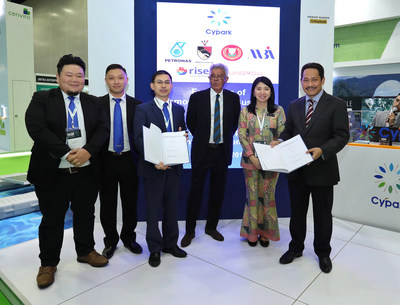
The signing ceremony

Chinese solar panel maker Risen Energy Co., Ltd. recently announced the receipt of an order to provide 150 MW of high-efficiency solar PV modules to a power stations in Malaysia. Malaysia’s Minister of Energy, Science, Technology, Environment and Climate Change Yb Yeo Bee Yin attended the agreement signing ceremony. It’s the biggest module order Risen Energy has to date won both in Malaysia and from an overseas floating power station.

As part of the agreement, Risen Energy will supply high-efficiency Jaeger 144 modules with an output power up to 395W each to the project. The modules will be shipped in batches starting this month and the delivery is scheduled to be completed by June 2020.

Risen Energy president Xie Jian said, “Malaysia is one of our key emerging markets as it boasts abundant light resources and policies favourable to the industry. We are excited to be a part of the project in Malaysia. To ensure the smooth operation of the power station, once completed, we will equip the facility with our Jaeger modules, which have proven better performance in resistance to light induced degradation and light and elevated temperature-induced degradation. Our optimised Jaeger modules can minimise hotspots and the impacts from shade effect on their performance in power generation. With lower total cost of ownership and labour expense, our modules will bring the project owner a lower levelised cost of electricity and higher income from power generation.”

Besides the PV market in Malaysia, Risen Energy has expanded its presence across major markets in the U.S., Europe, Southeast Asia, Central Asia and the Asia-Pacific region. Notably, the company has achieved remarkable results in Kazakhstan and Ukraine, among other markets along “the Belt and Road.” Additionally, Risen Energy is accelerating the growth of its energy storage business as its integrated “PV + energy storage” and “PV + energy storage + charging”. Furthermore, smart micro grid solutions have been used in commercial applications.

Risen Energy is experiencing an increase in both its top line and bottom line as the firm continues expanding globally at a steady pace. Its financial forecasts for the first three quarters of 2019 expects a net profit between 765-815 million yuan, an increase of 262.40%-286.09% year-on-year.

LONGi Wins 50MW Order For Its High Power Hi-MO 4 Panels In Vietnam

0

LONGi and DLG Solar signed a contract for a 50MW PV project in Vietnam, which would adopt LONGi’s latest high powered Hi-MO 4 modules based on the new M6 monocrystalline wafer. This is another megawatt Hi-MO 4 order since its launch in May-2019 during Intersolar Europe.

Located in Ninh Thuan Province, the project will cover an area of 60 hectares and generate up to 80,000 MWh annually. The total investment is estimated to reach US$50 million.

The 72-cell variant of Hi-MO 4, the panels specified in this project, reaches a maximum power of 440W. This high power performance not only saves BOS costs, but increases power generation and revenues. This is a benchmark for promoting the rapid development of Vietnam’s photovoltaic market.

“I chose LONGi due to its product quality and strong brand, which has a good reputation among customers and partners worldwide. I have never doubted the quality of LONGi, and I am fully assured from your continuous innovations in technology and products.” Said Ta Quoc Dung, General Manager of DLG Solar.

“Vietnam is a key market for LONGi’s overseas strategic direction.” Mr Dennis She, Senior Vice President of LONGi Solar said, “We appreciate the trust and support from our customers. LONGi has booked over 2GW orders for our Hi-MO4 modules and can fully meet the market demand. We will provide high efficiency monocrystalline products with lower LCOE and affordable clean electricity for local enterprises and people based on the differentiated demands in Vietnam’s PV market.”

LONGi Brings Hi-MO 4 High-Power Bifacial Mono PERC Module To India Market At REI

0

LONGi presented its new Hi-MO 4 high-power bifacial module at the 13th Renewable Energy India Expo bringing the high performance module to the Indian market.

In his introduction at the exhibition, Dr. Rahul Kapil, Operation VP and Director, LONGi Solar India, said, “Hi-MO 4 uses the new M6 166mm size silicon wafer. Employing upgraded PERC technology, cell efficiency can reach 22.5% and front-side power up to 440W. Hi-MO 4 is available in monofacial and bifacial, variants. In bifacial, the module can achieve 8%-20% in rearside power gain in different surface environments.”

As the world’s second most populous country, India’s economy has grown rapidly in recent years, and with it, a sharp increase in energy demand. The Indian government has committed itself to the use of reliable clean energy to address power shortages and environmental issues.

“India is one of the important markets for the global photovoltaic industry. Large-scale photovoltaic power plant projects are developing rapidly. Solar products with both high-efficiency and good value are important for Indian customers. Hi-MO 4 bifacial PERC modules are the most ideal choice for us”, said local customer at the exhibition.

“The Indian market has a pivotal role in LONGi’s global strategy. In the past year, LONGi has supplied several hundred megawatts monocrystalline modules for photovoltaic power plants in India,” said Dr. Rahul Kapil. “LONGi is committed to a strategy of “Think Global, Act Local” where global bankability and production scale is matched with local Indian expertise, products and customer service.”

LONGi will continue to supply India and South Asia with high-efficiency products with advanced technologies as the region ushers in a new era of green energy.

Sungrow To Supply Energy Storage Systems For A 15MW/32MWh Storage Portfolio In The U.S.

0

Sungrow, the global leading inverter solution supplier for renewables, announced that it has signed a contract to supply its fully integrated Energy Storage System ST4200KWh-2000 to a 15MW/32MWh project in Massachusetts.

The project will participate in ISO-New England wholesale markets after completion, and is one of the first solar-plus storage offerings to contribute to the Solar Massachusetts Renewable Target Program, setting the benchmark for Massachusetts’ solar-plus-storage projects.

The future-proof Sungrow ESS solution ST4200KWh-2000, which integrates separate PCS and Li-ion battery, energy management system, local controller, HVAC and FSS in a 40-foot container, will bring together the plant’s production processes within a one-stop-shop to allow flexible transportation and on-site installation, as well as ensure unified communication, system safety and optimal system efficiency.

The combined solar and storage portfolio, is operated by Stem, the US energy firm, and owned by Syncarpha Capital, LLC, a New York-based private equity firm. “We are happy to partner with Sungrow which has a trusted 20 plus year track record in this industry for the first batch of SMART projects and many more in the future. We felt strongly about Sungrow Samsung SDI’s product offering, especially with the fully integrated concept, which really helped us reduce the LCOE and operational costs,” said John Carrington CEO of Stem Inc.

“As a technical leader in power conversion, Sungrow offers innovative solar-plus storage solutions that are future-focused. We have already completed prestigious projects in the U.S. and across the globe, connecting renewables to the grid to bring sustainable and reliable power to people,” said Hank Wang, President of Sungrow Americas.

The project, which is deployed across five distribution grid-connected sites, will be supported by Sungrow’s dedicated team of experienced professionals in the U.S. and is planned for commissioning in Q2 2020.

Waaree Energies Expands Module Manufacturing Capacity By 500 MW To 2,000 MW

0
domestic-solar-pv.jpg (301×195)

Due to various policy driven and geo-political factors, the Indian solar manufacturing segment is equipped only to produce module equivalent to 3 GW or 3,000 MW.

Domestic solar PV module manufacturer Waaree Energies on Tuesday said it has increased its module manufacturing capacity by 500 megawatt to 2,000 MW. With the manufacturing facility based in Gujarat, the company has now upgraded the production capacity to 5.7 MW per day. The demand for solar energy has seen an uptake in the recent years with the current requirement holding strong at 25 GW.

The demand for solar energy has seen an uptake in recent years.

However, due to various policy driven and geo-political factors, the Indian solar manufacturing segment is equipped only to produce module equivalent to 3 GW or 3,000 MW.

“Waaree aims to bridge this demand–supply gap and inch towards a viable indigenous ecosystem. The company has on Wednesday reached the level of 2 GW from 1.5 GW expanding its module manufacturing capacity by 500 MW. This will create 550 direct and 350 indirect jobs in the sector,” a company statement said.

The company has upgraded the production capacity to 5.7 MW per day, it added.

“The company has supplied over 2.5 GW of solar panels till date, and commissioned over 600 MW of solar EPC projects in India. With the recent expansion touching 2 GW, we foresee creating jobs in the surrounding villages, largely employing the blue-collar workforce,” Waaree Energies Ltd Director Sales & Marketing Sunil Rathi said.

Waaree Energies, the flagship company of Waaree Group, has India’s largest solar PV module manufacturing capacity of 2 GW at its plants in Surat and Umbergaon in Gujarat.

The company has presence in over 300 locations in India and 68 countries internationally.

The company had also commissioned a 50 MW ground-mounted solar project in Vietnam in June this year.

Tata Power Solar Won 105MWp Bid Of One Of The Largest Floating Solar Plants In The World To Be Installed At NTPC Kayamkulam In Kerala

0

Floating solar system on reservoir with a project capacity of 105MWp at NTPC site at Kerala

Tata Power Solar, India’s largest integrated solar company and Tata Power’s wholly-owned subsidiary, post reverse auction of 105MWp Floating Solar Project, have received a Letter of Award to develop this project worth approx. INR 343 crores including 3 years O&M.

This project is one of the most prominent floating solar projects in the country. The venture will be executed on the reservoir of NTPC Kayamkulam District Allappuzha, Kerala. The project is required to be commissioned not later than 21 months.

Mr. Ashish Khanna, MD & CEO, Tata Power Solar and President, Tata Power (Renewables) said “We are pleased with this achievement, as 105MWp floating solar project will be another milestone in our company accomplishments and reinforce our commitments to deliver complicated projects. Floating Solar has immense potential in our country and we will ensure that this project will act as a benchmark for Floating Solar Project.”

ADB, Nauru Sign Grant Agreement For New Solar Project

0

The Asian Development Bank and the Government of Nauru today signed a $22 million grant for a project that will fund the delivery of reliable, affordable, secure, and sustainable solar energy to help meet the socioeconomic development needs of the Pacific island nation.

The grant for the Solar Power Development Project was signed by ADB Director General for the Pacific Ms. Carmela Locsin and Nauru’s Minister of Finance and ADB Governor Mr. Martin Hunt at a ceremony in ADB’s headquarters in Manila. The Government of Nauru will contribute $4.98 million towards the initiative.

“Nauru currently relies heavily on imported diesel fuel for power generation,” said Ms. Locsin. “The Solar Power Development Project will reduce diesel dependency and help boost the amount of electricity generated from renewable sources from 3.0% to 47%.”

The grant will fund a 6-megawatt grid-connected solar power plant and a 2.5 MW-hour, 5 MW battery energy storage system to help supply continuous power even when solar energy is interrupted by cloud cover. The system will be fully automated and integrated with the existing diesel system to optimize solar energy use, enable optimal battery energy storage system charging and discharging, and allow optimal shut-off of the diesel engines. This will reduce Nauru’s reliance on diesel for power generation and decrease production costs.

The project will strengthen the institutional capacity of the Nauru Utilities Corporation by training staff in the operation and management of the solar plant and the battery energy storage system, while supporting gender-mainstreaming efforts and providing project implementation assistance. Project-related employment will include gender targets. When the project is complete, solar power will provide 100% grid-connected electricity supply to the people of Nauru during daylight hours.

The Nauru Solar Power Development Project is one of a series of renewable energy projects being financed under ADB’s Pacific Renewable Energy Investment Facility, which was developed in response to the growing demand from the region for energy finance. The facility also provides innovative financing mechanisms and upscale support for sector reform in the smallest 11 Pacific island countries consisting of the Cook Islands, the Federated States of Micronesia, Kiribati, Nauru, Palau, the Marshall Islands, Samoa, Solomon Islands, Tonga, Tuvalu, and Vanuatu.

ADB has been supporting Nauru since 1991, and has committed a loan of $5 million, grants totaling $97.61 million, and technical assistance projects worth $6.96 million.

ADB is committed to achieving a prosperous, inclusive, resilient, and sustainable Asia and the Pacific, while sustaining its efforts to eradicate extreme poverty. In 2018, it made commitments of new loans and grants amounting to $21.6 billion. Established in 1966, it is owned by 68 members—49 from the region.

ADB, DHD Deal To Provide First Large-Scale Floating Solar PV In Viet Nam

0

The Asian Development Bank today signed a $37 million loan agreement with Da Nhim–Ham Thuan–Da Mi Hydro Power Joint Stock Company to finance the installation of a 47.5 megawatt peak floating photovoltaic solar power facility on the man-made reservoir of DHD’s existing 175 MW Da Mi hydropower plant.

The project marks the first large-scale installation of floating solar PV panels in Viet Nam and the largest installation in Southeast Asia.

“This project will help to boost the share of renewable energy in Viet Nam’s overall energy mix and decrease the dependence on imported fossil fuels such as coal,” said ADB Private Sector Operations Department Deputy Director General Mr. Christopher Thieme. “The pairing of these two clean energy technologies—hydropower and solar—is a simple but a highly innovative achievement, which can be replicated elsewhere in Viet Nam and across Asia and the Pacific.”

DHD Chief Executive Officer Mr. Le Van Quang and the Deputy Director General of ADB’s Private Sector Operations Department Mr. Christopher Thieme (front) with the signed agreement. Behind them are the Ambassador of Canada Mrs. Deborah Paul (third from left, second row) and Senior Representative of JICA in Viet Nam Mr. Shu Kitamura (second from left, second row), along with ADB private sector operations team members.

DHD, a subsidiary of the Viet Nam Electricity Power Generation Corporation 1, currently owns and operates four hydropower plants: Da Mi (175 MW), Ham Thuan (300 MW), Da Nhim (160 MW), and Song Pha (7.5 MW). DHD’s total generation capacity is 642.5 MW, about 1.7% of Viet Nam’s total generation capacity.

“We are proud to be the first company in Viet Nam to construct a floating solar power plant on a hydropower reservoir,” said the Chairman of the Board of DHD Mr. Nguyen Trong Oanh. “This project aligns with DHD’s strategy of investing in renewable energy to decrease dependence on fossil fuel, contribute to energy security, mitigate climate change, and promote environmental protection and sustainable socioeconomic development. Hydropower reservoirs in southern Viet Nam have vast solar power potential. Capitalizing on the strong relationship between EVN and ADB, we have worked together to catalyze a new source of power for the country.”

The financing package includes a $17.6 million loan from ADB’s ordinary capital resources. This is supplemented by $15 million of blended concessional cofinancing provided by the Canadian Climate Fund for the Private Sector in Asia and its follow-on fund, the Canadian Climate Fund for the Private Sector in Asia II. These funds were established by the Government of Canada to encourage private investment in climate change mitigation and adaptation projects in Asia and the Pacific.

The package also includes a $4.4 million parallel loan from the Leading Asia’s Private Infrastructure Fund, supported by Japan International Cooperation Agency through a $1.5 billion equity commitment. LEAP is focused on delivering high quality and sustainable private sector infrastructure projects that reduce carbon emissions, improve energy efficiency, and offer accessible and affordable health care, education, and communication services to ADB’s developing member countries.

ADB is committed to achieving a prosperous, inclusive, resilient, and sustainable Asia and the Pacific, while sustaining its efforts to eradicate extreme poverty. In 2018, it made commitments of new loans and grants amounting to $21.6 billion. Established in 1966, it is owned by 68 members—49 from the region.

ADB, Infrastructure Asia Sign Agreement To Promote Innovative And Green Finance For Sustainable Infrastructure In Southeast Asia

0
From left to right: Enterprise Singapore Chief Executive Mr. Png Cheong Boon; Infrastructure Asia Executive Director Mr. Seth Tan; ADB Director General for Southeast Asia Mr. Ramesh Subramaniam; Minister in the Singapore Prime Minister’s Office and Second Minister for Finance and Education Ms. Indranee Rajah; and Monetary Authority of Singapore’s Deputy Managing Director for Markets & Development  Ms. Jacqueline Loh.

The Asian Development Bank and Singapore’s Infrastructure Asia today signed a cooperation agreement to help governments in Southeast Asia adopt innovative and green finance approaches to identify and develop bankable and sustainable infrastructure projects in the region, where the annual infrastructure investment needs total $210 billion until 2030.

The agreement was signed during the Asia Infrastructure Forum in Singapore by ADB Director General for Southeast Asia Mr. Ramesh Subramaniam and Executive Director Mr. Seth Tan for Infrastructure Asia, a Singaporean agency with the mandate of supporting Asia’s economic and social growth through infrastructure development.

“Southeast Asia faces significant financing gaps in meeting its infrastructure needs, including for climate change mitigation and adaptation costs,” said Mr. Subramaniam. “We need innovative financing approaches to mitigate risks in projects and better leverage public funds to catalyze more financing from private and institutional partners, support greener and cleaner development, and help solve critical development challenges.”

“Projects structured with better financial and technical elements, along with good partnerships, are key to helping improve the bankability of Asia’s sustainable infrastructure projects,” said Mr. Tan. “Through this collaboration with ADB, Infrastructure Asia will work in close consultation with the international financing, credit enhancement, and technology ecosystem in Singapore to improve municipalities and state-owned enterprises’ access to private capital.”

Specifically, the agreement will allow ADB and Infrastructure Asia to help state-owned enterprises, as well as regional and municipal governments, in Southeast Asia improve their institutional, financial, and governance capacities for developing innovative and green infrastructure programs and projects.

To achieve this, the two institutions will launch the Innovative Finance Lab for Sustainable Infrastructure, a virtual space supported by a biannual event in Singapore, to gather stakeholders across Southeast Asia together to exchange knowledge, improve their policy-making capacities, and foster the adoption of innovative and green finance models in local infrastructure projects.

The Innovative Finance Lab will also serve as a capacity-building platform for the Association of Southeast Asian Nations’ Catalytic Green Finance Facility, which was launched in April 2019 to boost the development of green infrastructure projects across ASEAN by catalyzing public and private capital and technologies. The ACGF is part of the Green and Inclusive Infrastructure Window, launched by Southeast Asian governments, ADB, and major development financiers under the ASEAN Infrastructure Fund, a regional financing initiative established in 2011 that has committed $520 million for energy, transport, water, and urban infrastructure projects across the subregion.

ACGF aims to mobilize around $1.3 billion from a number of sources, including the ASEAN Infrastructure Fund, ADB, the German development cooperation through KfW, the European Investment Bank, the Republic of Korea, and Agence Française de Développement. The facility is also supported by other entities, including the Organization for Economic Co-operation and Development, the Global Green Growth Institute, and the Overseas Private Investment Corporation.

ADB is committed to achieving a prosperous, inclusive, resilient, and sustainable Asia and the Pacific, while sustaining its efforts to eradicate extreme poverty. In 2018, it made commitments of new loans and grants amounting to $21.6 billion. Established in 1966, it is owned by 68 members—49 from the region.

Week In India: SECI’s 7GW Tender, Railway’s 33 MW Rooftop Projects and more

0

Below are the top weekly news updates for India’s solar energy industries one should know:

The Rooftop Solar Power Scheme In Gujarat Aims To Cover 2 Lakh Families

Saurabh Patel, Gujarat Energy Minister, said that the rooftop solar power scheme will be covering two lakh households in Gujarat by 31st March, 2020. According to this scheme locals can install solar rooftops in their buildings for solar energy generation in case of any surplus, they can sell it to the power grid. The government has declared a 40% subsidy for people who will or have installed solar panels for a capacity of 2 KW and a 20% subsidy for a capacity of 3 KW to 10 KW. They can avail this subsidy under the state government scheme or under the similar schemes of central government.

SECI To Increase Solar Tender Capacity Upto 7 GW With 2 GW Of Manufacturing

Solar Energy Corporation of India has increased the solar tender from 6 GW to 7 GW. The tender has been amended to 7 GW of Interstate Transmission System (ISTS) connected solar photovoltaic (PV) projects with a solar manufacturing capacity of 2 GW. SECI has set the maximum tariff slab of Rs. 2.93/kWh compared to the previous slab of Rs.2.75 which is an increase of 6.5%. A SECI official confirmed that the tender is according to the MNRE order and the new date for submission of bid is October 31,2019.

Renewable Energy Deviation Settlement Regulations To Be Launched By Maharashtra From Jan 2020

MERC has directed the Maharashtra State Load Despatch Center (MSLDC) to revise its forecasting and scheduling procedure in line with the principles and rules of commission in two weeks. The commission has also directed MSLDC to take stakeholder’s views into account and take their approval in 45 days. Forty-three renewable energy generators filed a petition along with Maharashtra State Load Despatch Center (MSLDC) and Manikaran Analytics Limited for the removal of hurdles from the provisions of the MERC (Forecasting, Scheduling and Deviation Settlement for Solar and Wind Generation) Regulations, 2018, and its implementation. The hearing for the 43 cases were done together by the commission because of the similarities in the cases. After which some of the issues were considered to be addressed.

US Alerts Against The Cheap Chinese Imports For Solar Equipments

According to Francis R Fannon, assistant secretary of state for energy resources, it is important to consider service, quality, overall costs and geopolitical implications before adopting the Chinese imports which are often cheaper. Further he even mentioned that reliability and cost of decommissioning should be a factor. Although the imports might be 5% cheaper but the reliability and decommissioning downgrades over the years. He was present during the launch of Flexible Resources Initiative which is under the US-India Clean Energy Finance Task Force.

Lakshadweep, A Growing Potential For Solar Energy

The energy consumption in Lakshadweep per capita is expected to increase upto 962 units by FY19. Lakshadweep is the smallest UT receiving an abundant amount of sunlight. Hence, opting for solar PV systems would be an ideal solution for the increasing energy consumption. There are policies and subsidies allowing to set up solar power plants with the best deals.

Indian Railway Invites Bids For 32.56 Mwp Solar Rooftop

Indian railways is inviting bids to set up 32.56 MWp of grid-connected rooftop solar system for railway establishments, offices, and others. This project will be under public-private partnership on the basis of ‘design-build-finance-operate-transfer’. The developer who gets this tender shall be accountable from the start to end design of this project, involving all the necessary procedures. The developer will also have to provide operation and maintenance support for 25 years.  These systems will be covering up to 117 locations of four zonal railways – Easter, North Central, North frontier and Northern, and coach production units in Kapurthala and Raebareli. One developer can either bid for any one location of for all the zonal locations. However, the developer should bid for the full quoted capacity.

Maharashtra Has Extended The Bidding Deadline For Its Solar Tender Of 1350MW

Maharashtra State Electricity Distribution Company Limited (MSEDCL) extended its bid submission deadline till 15th October, 2019 for its 1,350 MW projects which is spread across 30 districts. This project is under the Mukhyamantri Saur Krishi Vahini Yojana. This project has a vision to provide with power in the daytime to the consumers for agriculture. This new submission date is both for the technical and financial bids. This project will be with 50MW capacity each which will be developed in 24 districts and 25 MW each each across six districts.

World’s Largest Solar Farm: An Investment Of $13bn On 15,000 Hectares Of Land         

Australian technology billionaire Mike Cannon-Brookes has recently announced that he would be investing in Singapore-based Sun Cable to create the world’s largest solar farm. However, the co-founder of the software company Atlassian is yet to reveal how much he is going to invest, the project would enable Singapore to get away from its reliance on imported liquid natural gas, and thereby achieve its greenhouse gas emissions goals. $13 billion is the estimated valuation of Sun Cable’s proposed solar farm. The company aims to develop the world’s largest solar energy farm to power Singapore from the Australian desert.

Shell To Join The Solar Energy Sector With The Acquisition Of Orb Energy, India
Shell, one of the global leader has purchased 20% stakes of Orb Energy which provides a credit to small and medium-sized enterprises (SMEs) for installing solar rooftops. Orb energy is known to have sold around 160,000 systems in India having a capacity of 75 megawatts. Shell aims to provide a reliable source of electricity to a 100 million people in the developing countries by 2030. According to Orb Energy, this will help them to provide cleaner and affordable energy solutions to SMEs in India.

10 Per Cent Growth After GST Rate Cut For Solar Thermal Industries

Solar thermal industries are expecting a 10% percent growth after the GST rate cuts on the components from 18% to 5%. The STFI (Solar Thermal Federation of India) secretary proceeded towards the GST directorate general and the finance minister to convince them. Hence with this rate cut the final product will become economical to the consumer hence seeing a growth in the market.

Hanergy’s Renewable Energy Center Becomes The World’s First Certified LEED Zero Carbon Building

0

USGBC’s LEED certification authority has announced that Hanergy’s Renewable Energy Center has received the prestigious LEED Zero certification, becoming the world’s first certified “Zero Carbon” building and one of the first three “net-zero” projects.

As one of the most influential green building organizations in the world, USGBC (United States Green Building Council) has been committed to promoting the “greening” process of the global construction industry, with its LEED (Leadership in Energy & Environmental Design) certification system considered the most authoritative and most widely used green building certification system in the world.

On November 14th, 2018, USGBC officially launched the LEED Zero certification program to complement the LEED system by verifying the achievement of net-zero goals and signaling market leadership in sustainable development. To obtain the sought-after LEED Zero certification, a building is required to create more than its output or eliminate more than it produces within one year of operation to meet one of the following standards: zero carbon, zero energy, zero water consumption or zero waste.

During the LEED Zero Carbon certification process, Hanergy’s Renewable Energy Center was adjudged to uphold the three-level energy efficiency concept of self-sufficiency, surplus storage, and grid independence, while exhibiting green environmental protection design, technological innovation, and sustainable development. Furthermore, the exhibition center’s case was strengthened by the annual estimation of saving 104 tons of standard coal and reducing carbon dioxide emissions by 314 tons, which is equivalent to planting 13,745 trees.

Located in Beijing’s Olympic Park, Hanergy’s Renewable Energy Center is an all-solar green building, covering 7119 square meters and featuring Hanergy’s HanWall, flexible thin film solar modules on the top and sides of the building and HanBrick on the walkway. The one-of-a-kind exhibition center adopts the world’s leading copper indium gallium selenide (CIGS) thin-film technology for power generation and an independently developed intelligent micro-grid management system, which optimizes the operation of its power generation, power consumption, power storage, and power sales. Additionally, the unique system also carries out energy interconnection and sharing with the company’s headquarters to form a regional intelligent microgrid.

USGBC & GBCI North Asia Managing Director, Andy To, highly praised Hanergy’s green achievements, “As the world’s first LEED ‘Zero Carbon’ certification project, Hanergy’s Renewable Energy Center has demonstrated the progress being made to push buildings towards the goal of “net-zero” globally.”

“At present, the world’s first LEED “Zero Energy” and “Zero Water” certification projects have been located in Brazil at Petinelli’s HQ and Eurobusiness’ office building respectively. Hanergy’s Renewable Energy Center has now become one of the best in the world and represents the best practice of ‘net-zero’ construction in China. We look forward to seeing more projects achieving the LEED Zero certification and leading the next trend of net-zero construction.”

Cao Yang, Hanergy Thin Film Power Group Senior Vice President, added, “At a time when the social impact of green building is increasing, actively promoting green building certification for existing buildings is our unescapable mission for sustainable development of buildings and the environment. Therefore, we feel honored to receive the world’s first LEED zero-carbon certification, as it will have profound implications for the clean energy market and signal the beginning of a real energy revolution. We believe that “green energy” technology not only benefits wider fields of construction, but it also outlines a more ambitious vision for building energy-saving.”

Earlier in the month, Hanergy’s Renewable Energy Center was also awarded the LEED EB O+M (Existing Building: Operations and Maintenance) Platinum Certification with a record high score of 94 points. USGBC’s LEED Platinum Certification is regarded as the highest honor in the green building industry and one of the most difficult green building certifications to obtain.

Hanergy Takes A Notch Up In Solar Car Market

0

Hanergy Glory Solar Technology, an EV startup announced today that it plans to raise USD 25 million for 10-20% of its company share to fund its solar car program, including further developing its R&D in solar vehicle power system and establishing sales channels.

The announcement is aligned with the company’s robust plan to strengthen its foothold in solar car market. Earlier last month, Hanergy Glory Solar Technology has successfully concluded a one-month test drive of the world’s first commercial solar power vehicle solution, Chinese K-car at China Automotive Technology and Research Center.


During the 30-day trial, at the end of each day after a 20km run, the Chinese K-Car retained 60%-80% of battery charge which means the car could still run a further 30km to 80km in that single day. By August 7th, the last day of the 30-day test drive, despite an 8-day straight overcast or rainy weather, the battery still retained 60% of power, proving another irreplaceable feature of solar thin-film, which is generating power even under low/weak light conditions.


According to Hanergy Glory, the tested solar car was built on the concept of the Japanese K-Car, a category of vehicle that was created to meet basic daily transportation needs. The emergence of China’s middle class is driving the demand for a vehicle that could serve multiple purposes including daily commutes and family trips. By readjusting the backseat, this highly flexible five-seat vehicle can also easily carry a wheelchair.

According to statistics by the Japanese Automobile Manufacturers Association (JAMA), in Japan, over 60% of K-car users do not drive more than 400 km a month, which is less than 20 km per day. Such mileage can be met by the solar solutions of this test.

“We summarized some conditions (KWH km/paved area/outdoor scene/20-30km/daily driving range) that solar energy could power the vehicle to the maximum to finally choose the EM3 model of Joylong Automobile and signed a cooperation agreement with them,” said Dr. Lu Tao, CEO of Glory Solar Technology Company.


According to Hanergy Glory, it has only tailored its solar system to apply the thin-film solution on EM3, while made some layering improvements on the lower part of the front end. “Next, our team will optimize the whole solar solution on the basis of the EM3 model, improve the fitment between our solar power generation system and the roof, enhance the aesthetic design, and ultimately achieve mass production,” said Dr. Lu Tao.
On September 25th, Hanergy Glory just signed with Zhejiang Tianyou Company a sales contract for 140,000 express delivery cars.
Hanergy Glory Solar Technology Company, an EV startup proposed the concept of “Plug-In Never” as a way to solve common issues faced by owners of more traditional electric vehicles that heavily rely on charging piles scattered within cities. With “Plug-In Never,” Hanergy Glory is making a bold statement and allowing consumers to never have to worry about overcurrent, overvoltage, overheating, and ground faults.

Further, as the automotive industry has been going through a sea of change since the advent of newer technologies that have transformed how vehicles are designed and manufactured, automobile companies are now focusing extensively on the impact of cars that run on solar, and are moving towards renewable sources of energy.

Global Solar Council Says Market Poised For New Growth Phase, Powered By Decarbonization Of Economy, Innovation And Cost Reductions

0
Representational image. Credit: Canva

Solar will play an important role in meeting Paris climate goals as installation growth eclipses the industry’s historical record. Low-cost distributed energy systems and potential for residential and agricultural sectors will have an impact on poverty reduction and combatting inequality.

The world solar market is poised for a new, dramatic phase of growth in which innovation in efficiency and lower costs will make solar technologies a major contributor to the Paris climate goals and help combat poverty and inequality, according to projections by the Global Solar Council.

The new phase of the solar market will dwarf the scale achieved so far in the industry’s 30-year history: compared with the 500 gigawatts of solar photovoltaic installed today, a new market boom will see more than 8,500 installed by 2050, based on International Renewable Energy Agency forecasts, to meet the climate targets set out in Paris in 2015.

According to the Global Solar Council’s outlook – presented during Solar Power International as part of the North America Smart Energy Week – utility-scale projects will continue to dominate the industry but there will be an important role to play in the residential sector and for distributed as well as off-grid energy thanks to new, innovative ways to implement solar solutions. Research is underway to continue improvements in solar module efficiencies and identify new materials that will help extend the dramatic reductions in manufacturing and system costs.

“The way solar will spread, enabled by new technologies and innovation, will be as important as the headline growth numbers,” commented Pranav R Mehta, Chair of the Global Solar Council and Chairman of the National Solar Energy Federation of India. “Given the widespread recognition of the urgency of the need to decarbonize our economies, the prospect having a solar plant on every farm will be a gamechanger, affordable storage will be a gamechanger and mass deployment of micro and mini grids will transform the energy system.”

During the Salt Lake City event, the Global Solar Council held its AGM, which saw the election of new leadership as the body looks to deliver its mission of promoting the rapid and widespread adoption of solar energy through market development, partnerships and education. That follows the greater visibility, impressive partnerships with international organizations and financial consolidation achieved under Chair Mehta.

Gianni Chianetta of Italia Solare will be Chair for 2020 while José Donoso of Uniòn Española Fotovoltaica was elected as Chair for 2021. The new board discussed the GSC strategy of extending its focus beyond the climate crisis to questions of how solar energy will help tackle socio-economic issues like inequality and poverty.

“Representing the solar industry at a worldwide level with members spanning all the major markets and both developed and emerging economies, the Global Solar Council has an important role to play as solar moves from a minor player in the energy system to a mass phenomenon, and to do that we are ready to work with other actors as well,” continued Pranav R Mehta.

STI Norland Develops Fourth Generation Dual-Row Single-Axis Solar Trackers

0

More than 850 MW of the STI-H250 dual-row trackers have been supplied so far.

STI Norland, a global supplier of solar trackers and fixed-tilt arrays, has launched the fourth generation of its STI-H250, the first dual-row, single-axis solar tracker in the world.

STI Norland was a pioneer in 2017 when it developed the STI-H250 and has since supplied and installed it in more than 30 PV plants, adding up to more than 850 MW of tracker capacity.

The solar tracker consists of two torsion beams positioned in a north-south axis on which PV modules are mounted. The two beams are linked and rotate simultaneously, following the path of the sun in the sky. They are moved by just one motor, cutting supply and maintenance costs.

In addition, the fourth generation of STI-H250 considerably increases its adaptability to complex terrain and irregular layouts. The data collected during months of on-site experience enabled STI Norland’s R&D department to keep applying improvements to the product and reach the current advanced version of the STI-H250.

“After two years of proven success of our dual-row trackers, other manufacturers are now following our steps,” said STI Norland chief executive Alberto Pérez Echeverría. “It clearly proves that we were on the right track when STI Norland bet on the design and manufacture of dual-row trackers. Compared to our competitors we are now so much ahead in terms of experience and product development.”

Sunseap Wins Tender For One Of Singapore’s Largest Solar Projects To Install More Than 170,000 Rooftop Solar Panels

0

Sunseap Group has won the tender for one of Singapore’s largest solar projects, to install more than 170,000 solar panels on rooftops of Housing & Development Board buildings.

Under the SolarNova 4 contract, Sunseap will be installing PV systems across more than 1,200 HDB blocks and 49 government sites. Six government agencies will be participating in the fourth tender.

The PV systems, when operational, will generate up to 70 MWp of solar energy, an amount typically generated from powering around 17,500 four-room HDB flats annually.

Including SolarNova 4, Sunseap will have installed more than 600,000 solar panels across 2.4 million square meters of roofspace, and will have produced enough clean energy to power more than 60,000 four-room HDB households.

The SolarNova program, jointly led by the HDB and the Economic Development Board, aggregates solar demand across government agencies to leverage economies of scale so that agencies with smaller energy demands are able to enjoy clean energy at a lower cost.

This is the second SolarNova tender won by Sunseap, the first being in 2015.

Frank Phuan, CEO and executive director of Sunseap Group, said: “This project is a significant milestone for solar adoption in Singapore. When this project is completed, Sunseap would have installed solar systems on top of more than 2,700 HDB blocks, or more than 27% of all HDB blocks. This is also in line with Singapore’s pledge at the recent United Nations Climate Action Summit, where our prime minister said that Singapore will be switching to a cleaner fuel mix and using cleaner energy solutions in order to reduce our carbon emission by 2030.

“This is a testament to our tremendous growth since we started Sunseap eight years ago and it would not have been possible without the support of partners like HDB and EDB.”

Phuan added that Sunseap will deploy at least 170,000 bifacial solar panels, the latest in solar technology. Unlike typical solar panels, the bifacial solar panels are able to generate power on both sides of the modules and therefore increase energy yield by up to 15%. They are also more durable, lasting up to 30 years, as compared to 25 years previously.

Lawrence Wu, president and executive director of Sunseap Group, said: “This tender truly reinvigorates us and the work we do by providing us the thrust to continue playing our part as a corporation in combating climate change, and an opportunity to generate more renewable energy for the masses in Singapore. Sunseap will continue to be relentless in developing new sources of clean energy generation and energy efficiency projects across Singapore to help achieve the reduction of carbon emissions.”

Since its inception in 2011, Sunseap has grown to become one of the largest developers in the region with a total contracted, completed and developmental asset project capacity of 1.7 GWp. It has a pipeline of projects in Australia, China, Taiwan, Japan and other parts of Southeast Asia.

In June, it commissioned a 168 MWp solar system in the Ninh Thuan province of Vietnam, one of the largest solar farms in the country. In Singapore, it is the largest developer of solar systems, winning six out of nine solar tenders held by the government to install solar systems on the rooftops of public housing and other government properties. Notable clients include Apple, Microsoft, the Singapore American School, the Singapore Cruise Centre, Jurong Port, ABB, Panasonic, PSA Singapore, ST Kinetics and Keppel Energy Ventures.

Some of its noteworthy innovative projects include participating in one of the world’s largest floating PV test-beds, in Singapore at the Tengeh Reservoir; building one of the world’s largest offshore floating solar farms along the Straits of Johor; and installing a hybrid off-grid solar system for Tanglin Academy, the largest tennis academy in Singapore.

Fourth Phase Of Mohammed Bin Rashid Al Maktoum Solar Park The First CBI-Certified Renewable Energy Project Financed In The GCC Region

0
Representational image. Credit: Canva

The fourth phase of the Mohammed bin Rashid Al Maktoum Solar Park – Noor Energy 1 – has become the first project in the Gulf Co-operation Council region to receive the Climate Bonds Initiative’s certification for renewable energy project financing, supporting the Dubai Clean Energy Strategy 2050.

The flagship project is a collaboration between the Dubai Electricity and Water Authority, Saudi renewables developer ACWA Power and the Chinese government’s Silk Road Fund.

Noor Energy 1 is the largest single-site concentrated solar power and single hybrid solar power project in the world, with three different solar energy technologies in deployment. The technologies include a CSP central tower and parabolic trough and PV panels. The park is being developed on an independent power producer model.

CBI is a reputable international non-profit organization working towards mobilizing and facilitating climate change solutions through the $100 trillion bond market and “green loans”. The initiative promotes investment in projects and assets which are necessary for a rapid transition to a low-carbon and climate resilient economy and which have strong credibility in the international financing market. The climate certification scheme is used globally by bond issuers, governments, investors and the financial markets to highlight investments that have real impact on a low carbon economy. The certification issuance was facilitated by lender Natixis, one of the project’s backers, as coordinator; and Sustainalytics, which verified the certification process.

The certification was granted to DEWA managing director and CEO Saeed Mohammed Al Tayer in the presence of Mohammad Abunayyan, chairman of ACWA Power.

Al Tayer said: “The CBI certification reflects the hard work and incredible progress that Noor Energy 1 has achieved over the years. It bolsters our constant pursuit in deploying the highest international standards and using the latest solar power technologies to transform Dubai into a hub of clean energy and the leading driver of [a] low carbon economy. Our overarching achievements will remain in a constant journey of growth to support the vision of His Highness Sheikh Mohammed bin Rashid Al Maktoum, vice president and prime minister of the UAE and ruler of Dubai, to enhance the shift towards a green economy by increasing our reliance on clean and renewable energy sources. We are honored to collaborate with ACWA Power and [the] Silk Road Fund on a remarkable project that will permanently leave its enduring effect on the solar power projects.”

ACWA’s Abunayyan said: “The CBI accreditation corroborates the potential of Noor Energy 1 and ACWA Power in transforming the green financing landscape and driving down the cost of capital for climate projects in developed and emerging markets. We are pleased to maintain our reputation as a partner of choice, delivering projects that contribute to the growth and development of vibrant economies such as Dubai. It is an honor to help fulfill the ambitious vision of Dubai’s leadership alongside our partners [the] Dubai Electricity and Water Authority. With the collective knowledge, financial capabilities and market expertise of DEWA and [the] Silk Road Fund, we were able to break several world records through a single project, including the world’s lowest CSP levelised cost of electricity of US$7.3 cents per kilowatt-hour.”

With 20% progress already achieved by Noor Energy 1, the flagship project is set to generate 950 MW with an investment of AED15.78 billion. The deployment of 700 MW of CSP; 600 MW from a parabolic basin complex and 100 MW from a solar central tower; and 250 MW from PV panels has positioned the fourth phase as the largest single-site solar IPP investment project in the world that combines CSP and PV technology.

Noor Energy 1 was also successful in breaking a number of world records, including registering the world’s tallest, 260m solar tower and the world’s largest global thermal storage capacity, of 15 hours; allowing for energy availability round the clock. This phase will provide clean energy for 320,000 residences.

The latest construction developments include the completion of the foundation of molten salt tanks and turbines and inauguration of the parabolic trough production line to produce the first of 63,600 units for the parabolic trough component and the solar central tower, reaching beyond 50m.

PMT: CLIP Group Erects Largest PV-Plant In Poland With EVO 2.0

0

The up to now most powerful PV plant in Poland has been connected at the end of August. With impressive 22.947 modules and a total output of nearly 7MWp, this project was a real challenge for planning, technics, logistics and assembly.

However, together with our long-standing partner Goldbeck Solar, our certified mounting partner Solartechnik Dresden and, of course, with our revolutionary flat roof mounting system EVO 2.0 South, we successfully made it.

The project on the company`s site in Jasin included 5 halls of the polish logistics group CLIP Logistics Magazyn. Existing installations and switching systems had to be taken into consideration and integrated into the new system during mounting. Special demands turned out through the restricted load reserves of the roofs which, however, could be resolved by using aerodynamically optimized side plates on the system and load transmission by ridge brackets.

The adherence to the static compression resistance of the mineral wool insulation of the roofs could be provided on the PMT System through additional measures and thus, the plant configured as “long-term free of failure”. In addition to the basic system EVO 2.0 South for flat roofs and trapezoidal sheet our newly developed AC converter bench and the adaptable line connection was mounted.

ReneSola Signs Agreements To Sell 22.3 MW Of China Distributed Generation Projects

0

Renesola, a leading fully integrated solar project developer, today announced that it has entered into an agreement to sell 11 rooftop distributed generation projects located in Zhejiang province to a China state-owned enterprise specializing in the solar energy industry.

Separately, ReneSola announced that it has agreed to sell three small scale DG projects located in Shanghai to a different, undisclosed third party.

The 11 rooftop DG projects in Zhejiang province have an aggregate installed generation capacity of 20.6 MW, and the three small scale DG projects in Shanghai have a combined capacity of 1.7 MW.

Renesola CEO Shelley Xu said: “These agreements once again demonstrate our ability to develop and monetize projects across the different geographies we serve. We believe our ability to execute our business plan will enable us to further strengthen our balance sheet and generate cashflow. With increased activity in project sales, our business momentum has accelerated and we are confident in our revenue expectations for the third quarter and beyond. We continue to look for opportunities to monetize our China DG assets as we transform into an asset-light project developer.”

Hanergy Inaugurates The World’s First Automated HanTile Production Line

0

The world’s leading clean energy company, Hanergy Mobile Energy Holding Group, recently on Sept. 30 officially put into operation the world’s first automated HanTile production line at Guiyang Mobile Energy Industrial Park in southwest China’s Guizhou Province. The company claims that it’s targeting the HanTile market scale of trillions.

Present at the inauguration ceremony, Chen Yu, the Deputy Secretary of the Municipal Party Committee of Guiyang, congratulated Hanergy for this milestone achievement. “We express our heartfelt congratulations to Hanergy for launching the world’s first automated HanTile production line in Guiyang, where is equipped with the excellent business environment. We welcome more large-scale projects to be built and invested here. We’ll extend all our support in order to maintain the high level and high quality standard for these upcoming projects.”

Chen Yu also visited the HanTile production line and related application products after meeting with Li Hejun and the team.

The Guiyang Mobile Energy Industrial Park is a key industrial project in Guiyang city. It started setup on March 2018 and covered a total area of approximately 220,000 square meters in the Guiyang Bonded Zone.

Subsequently, the HanTile automatic production line is amongst the crucial projects of Guiyang city and Hanergy Mobile Energy Holding Group. This project was signed in October 2017 and launched the mass production line in September 2019 to show the “Speed of Hanergy”.

Li Hejun, Chairman of Hanergy Mobile Energy Holding Group said, “At Hanergy, we express our gratitude to city government for their constant support and assistance to the development of Hanergy, which will further cooperate with Guiyang city to fully promote the projects and contribute to the local economy.”

Notably, the world’s first automated HanTile production line in Guiyang Mobile Energy Industrial Park, is regarded as one of the prominent projects for its fastest construction pace and highest effectiveness in Guiyang. The production line uses the world’s leading Copper-Indium-Gallium-Selenide (CIGS) thin film solar technology which can combine the flexible thin film solar chips with high light transmission glass to create a new green power generation material – HanTile. This material can obtain the “passive and ultra-low-energy building” or “zero-energy building” ideas which are significant to the new energy industry development and bring more economic and social development in the future.

In recent years, dozens of Chinese mega cities are already equipped with the HanTile applications. According to the data from China Brick and Tile Industry Association, the potential market size of HanTile can reach trillions of RMB per year.

The HanTile automatic production line is U-shaped with a curved transparent tempered glass which is exactly the same size of the thin film solar chip. This thin film can export the generated current after connected.

HanTile combines the concept of ecological architecture, fusion technology and design. Encapsulating flexible thin film solar power chips in curved glass as a form of tile to create a new power generation green technology building materials. It can completely replace the traditional roof tiles to be the part of the building while the materials and energy can be recycled in the building ecosystem to obtain an efficient, low-cost, ecologically balanced building environment. In 2019, HanTile also won the German IF Gold Award, which is known as the “Oscar of Design”.

Besides, Hanergy New Energy High-end Equipment Manufacturing Industrial Park & Global Settlement Center, the HanWall Industrial Base, the New Mobile Energy Equipment Manufacturing Industrial Base, the Hanergy Guiyang R&D Center were also developed in Guiyang in 2018.

Guiyang Mobile Energy Industrial Park also possesses the world’s leading MiaSolé CIGS thin film solar technology which can enhance the thickness of HanTile to be only 6.5 mm which is 1.2 mm thinner than the iPhone X mobile phone screen. HanTile weighs only 5.2kg but can bear 1.7 tons pressure or withstand level 12 of typhoons power. HanTile has already applied for 364 worldwide patents.

HanTile has also obtained the “ultra-low-energy buildings” and “zero-energy buildings” ideas. According to the reports, the 100 square meters of HanTile can generate the photovoltaic power which is equivalent to 123 tons of fuel power generation but reducing 322 tons of carbon dioxide emissions which is equivalent to planting 340 green trees.  

Around the same time as the inauguration of the world’s first automated HanTile production line in Guiyang Mobile Energy Industrial Park, Jinneng Mobile Energy Industry Park CIGS thin film solar core equipment installation ceremony was held in the Bengbu High-Tech zone in eastern China’s Anhui Province. The Bengbu Government and Hanergy Group had earlier signed a cooperation agreement for the Jinneng Mobile Energy Industrial Park project on April 28, 2018 and officially started the construction on May 30, 2018.

The first batch of 300MW CIGS equipment installed in the Park is the integrated chips interconnect equipment (ICI) which is developed by Hanergy’s American subsidiary Global Solar Energy (GSE) and is one of the core equipment of CIGS thin film solar production line. The operation setup was recently completed on September 29, 2019.


Once the planned 600MW CIGS industrial park in Bengbu is put into operation, the annual sales can be expected to reach 5 billion Yuan (700 million USD), according to Gu Yu, President of Jinneng Mobile Energy Industry Park. Since 2018, Hanergy launched the green power-generating technology building materials like HanTile, HanWall, HanRoad and other mobile energy products such as HanPower, HanPack and Humbrella based on the thin-film solar technology, and is receiving unprecedented responses around the world.
